
The beginning
My story, which begins in the early 1980s in the small coastal town of La Ciotat, would probably take several volumes to tell in full. I have tried to condense it as best I can here, focusing on my relationship with cyberspace, until I turn it into a book ;)
Back then, the town was not yet the seaside resort it would later become. It was a working-class town whose economy and reputation depended mainly on its shipyard.
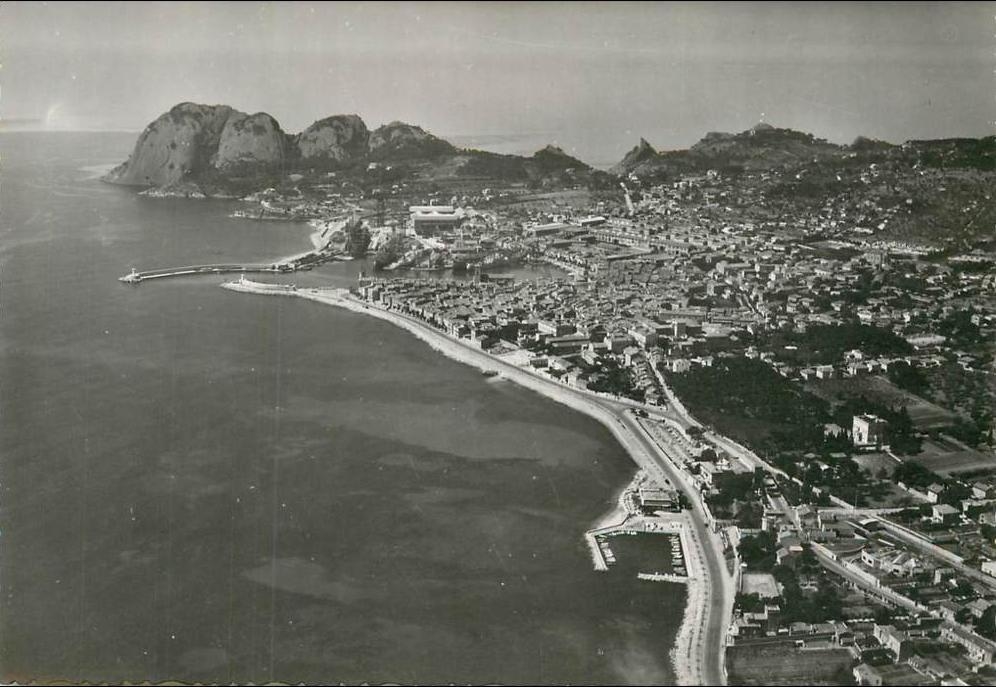
In many ways, I had a privileged childhood. Although my parents were ordinary workers in fields far removed from technology, they gave me the chance to live an extra-ordinary life.
At first, my mother worked in one of the town’s few supermarkets: Genty super, a chain that no longer exists. My father was a pastry chef employed at the “Deluy” bakery and pastry shop in Sainte-Marguerite.
Unlike many others, I was lucky enough to have loving parents for whom I was the absolute priority. Their income was modest, but my mother was brilliant at managing the family budget. I never went hungry, and I also got to try or have pretty much everything I wanted: piano, microscope, telescope, chemistry, judo, chess, reading, volleyball, role-playing games, and so on.
They were also accomplished “private chauffeurs”, who made themselves available whenever I needed them… or wanted them. So, to sum it up, I was particularly comfortable in the family cocoon.
La Ciotat also had a Sodim (another supermarket chain that disappeared more recently, in 2017), where my aunt would also work. If you are wondering about the unlikely connection between that shop and my journey into computing, it was during building work there, as part of a refurbishment or a change of brand, that its entire old network was thrown away… And that is how, a few years later, I would discover and play with my first coaxial network cables :)
But back to the point: at that time, nobody around me talked about computing. It was a world I knew absolutely nothing about.
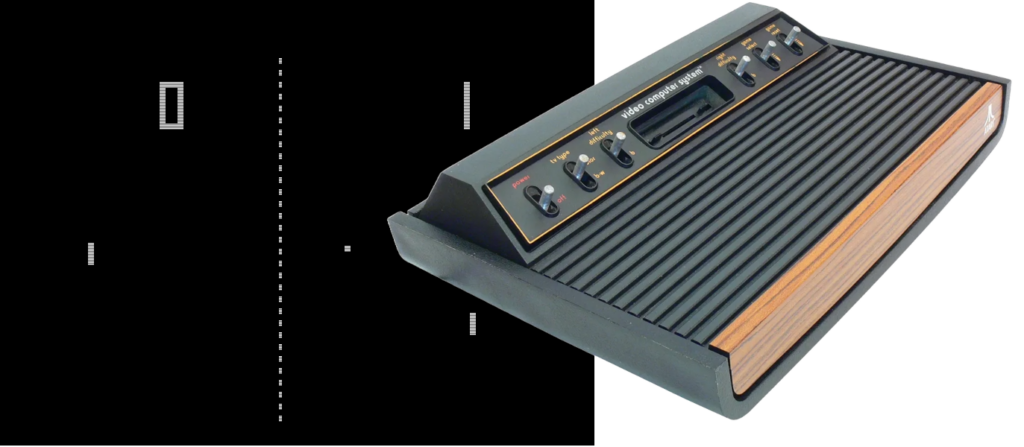 My only contact with that world at the time was through video games. In my earliest memories, my parents had a VCS console (later renamed Atari 2600, and sold in France from September 1981), on which I vaguely remember playing “Pong” and perhaps “Surround” (a game similar to “Snake”).
Pong, which you can see in the screenshot here, was simply called “Tennis” by my parents.
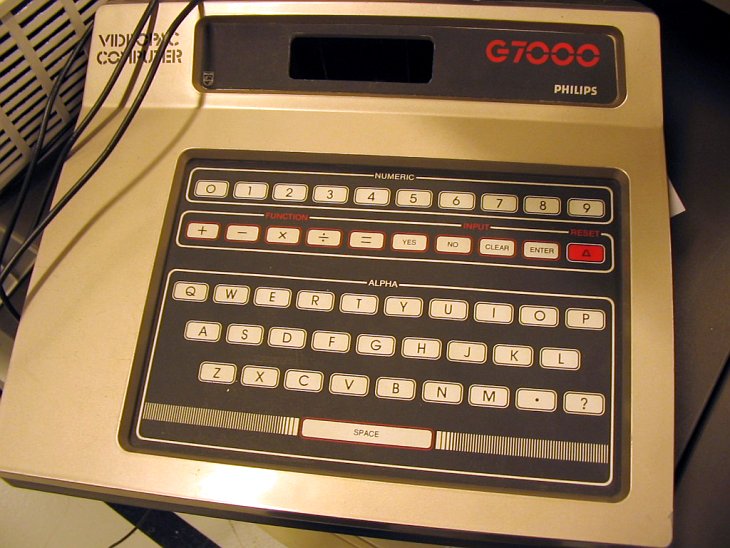
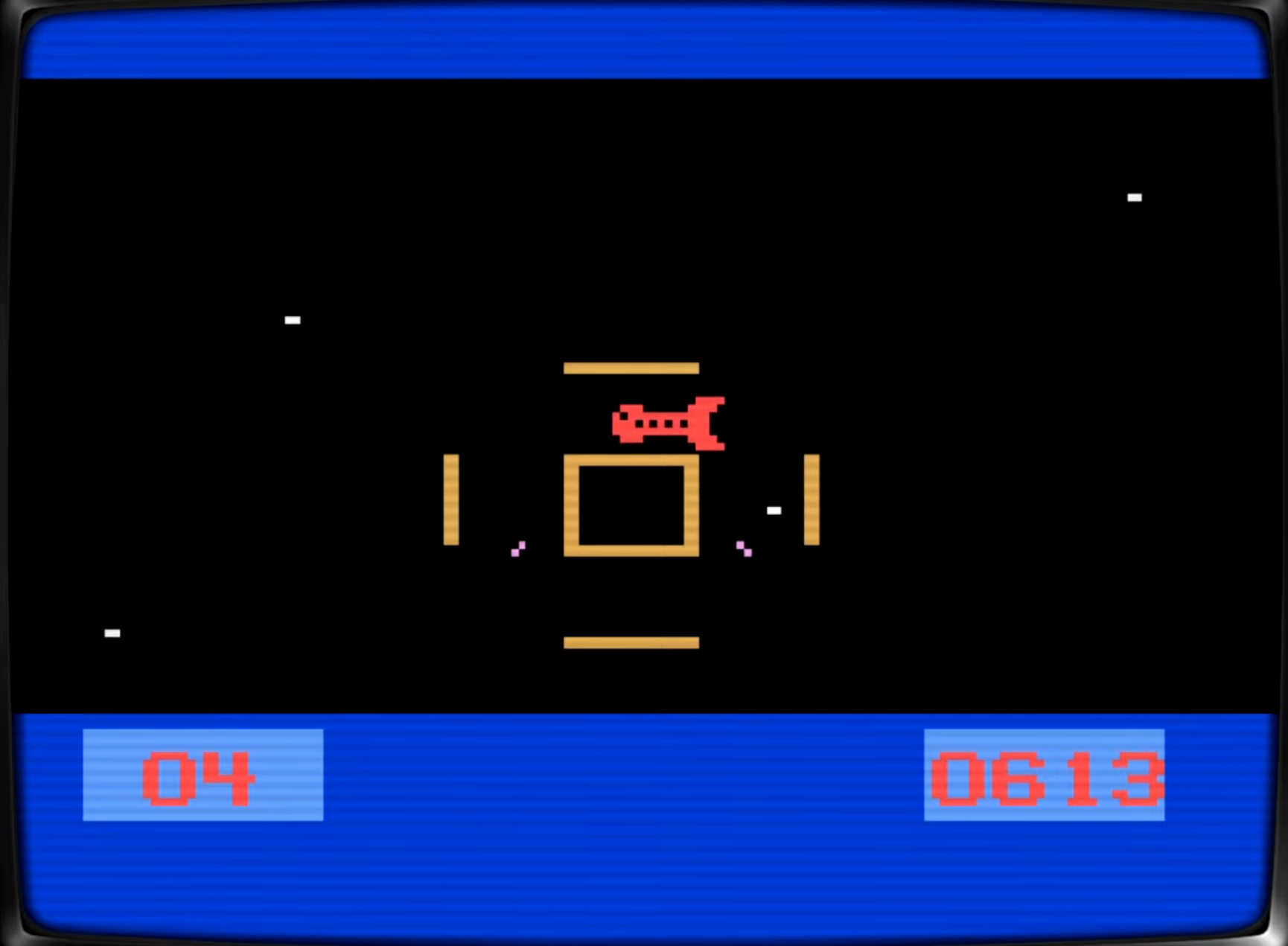
A little later, my cousin Sébastien would have a Videopac console, on which I occasionally got to play “La guerre de l’espace”. It was my favourite game on that console :)
Staying with supermarkets: it was not until 1980 that the first Auchan hypermarket opened nearby, in the town of Aubagne. My mother was actually one of the first to join the company there. It offered a much wider choice of products, often at much better prices too, which gave us several good reasons to shop there!
Getting to Auchan meant a drive of about twenty minutes, and for me it was a real ordeal! I did not cope well with car journeys and would quickly become travel-sick. I often asked us to stop halfway so I could get some air and, above all, avoid throwing up. But that suffering was not pointless: sometimes an extraordinary reward awaited me at the end of the first leg of that journey: Rocca. This specialist shop in the shopping arcade sold computers, consoles and video games, among other things.
Whenever we came through the “right” entrance to the shopping arcade, I had barely a few minutes to run my fingers over a keyboard, look at the screens and the various unfamiliar peripherals on sale in this treasure cave… A few minutes of dreaming, happiness and excitement, when I could feel that a whole world was hidden here, just waiting to be discovered.
Time passed, and personal computing was taking off. Naturally, Auchan started selling microcomputers too, directly competing with its “tenant”: a real stroke of luck for me! Going into Rocca was only possible if we used the right entrance to the shopping centre, which depended entirely on where we had parked: it was almost a “one in three” chance. But inside Auchan, the computer department was right at the entrance to the shop: impossible to avoid! Every trip became a chance to spend a few more minutes dreaming about this new world that was opening its arms to me. Any excuse was good enough to try to draw my parents back to that area a second time. And even when it only bought me a few extra seconds to watch the light coming from a few screens, it was well worth it!
The years passed… and barely seven days after my tenth birthday, my life was about to change… On that Christmas Eve, 24 December 1985, a whole new universe would finally open up to me: cyberspace. Luckily, we used to start our Christmas Eve celebrations very early: my father worked nights, and the holidays rarely meant rest, but rather overtime.
It was around 6 pm and I was sitting on the sofa when my parents came over to me. They handed me a parcel and wished me a merry Christmas! I gave the carefully wrapped present a quick look before opening it, and something was wrong. There was a problem, a size problem, and sometimes size matters too. This present was definitely not what I had been so certain I was going to get.
I took the parcel and quickly tore off the wrapping paper. Inside was a cassette recorder, 2 cables and two tapes. The first tape (though I would not listen to it until several days later) was a “funny” story about a clown whose adventures would take him to Sheikh Moustafa. He would end up eating an explosive sausage with a firecracker inside… I have no idea what it was called, but for the more intrepid readers who might want to try to track it down for me, here is a line I remember: “Cold sausage? My favourite dish, I’m going to enjoy this!… BOOM… (voice-over): There was a firecracker in the sausage…”.
The second tape looked even less interesting: nothing seemed to particularly distinguish it from the first, and its name did not make me want to listen to it either: Hunchback… My powers of observation had evidently been impaired by the “emotional shock” of this particularly unpleasant pseudo-festive experience. I was telling you earlier that all my Christmases had been wonderful: but this one really had not started well.
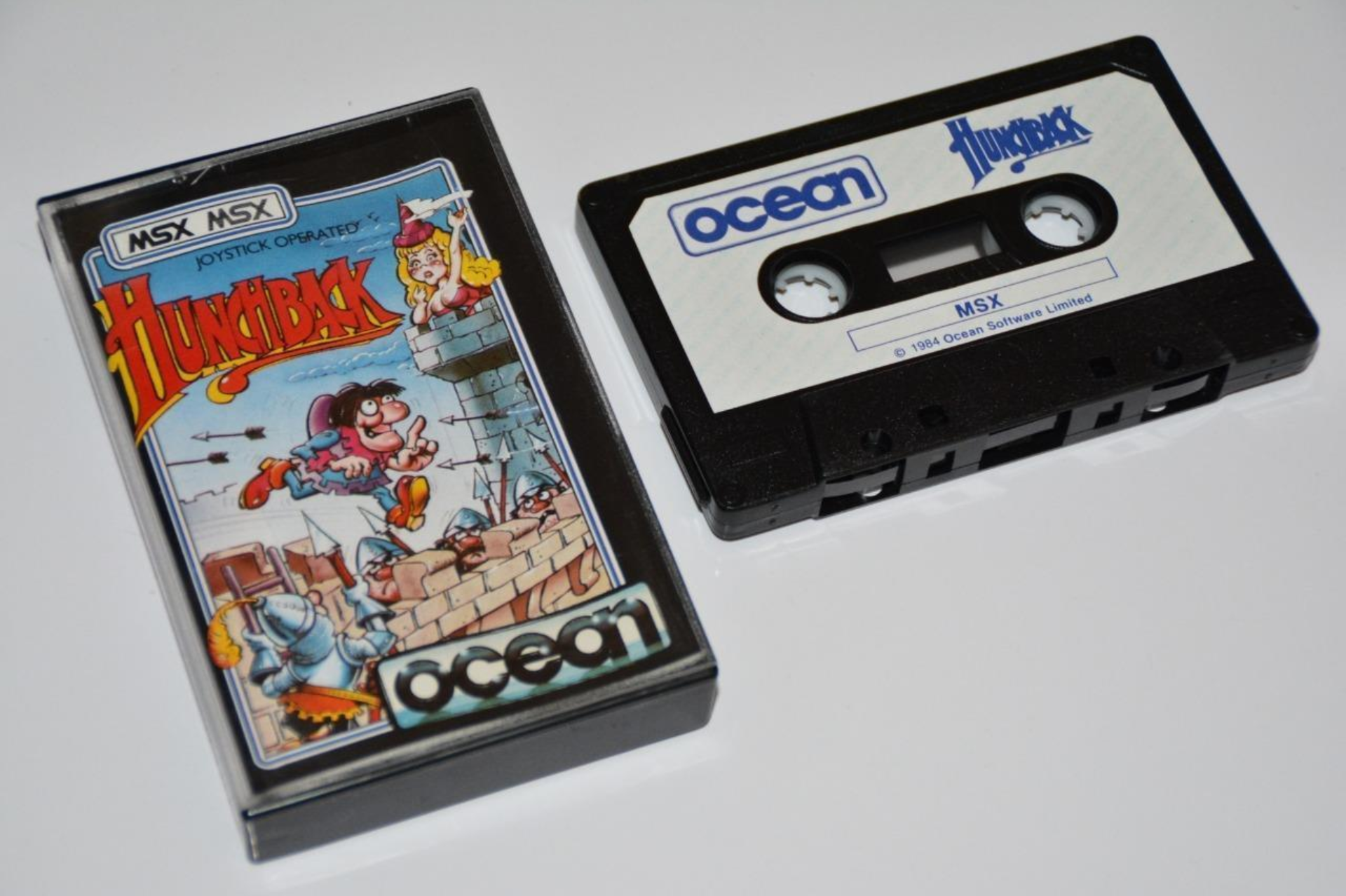
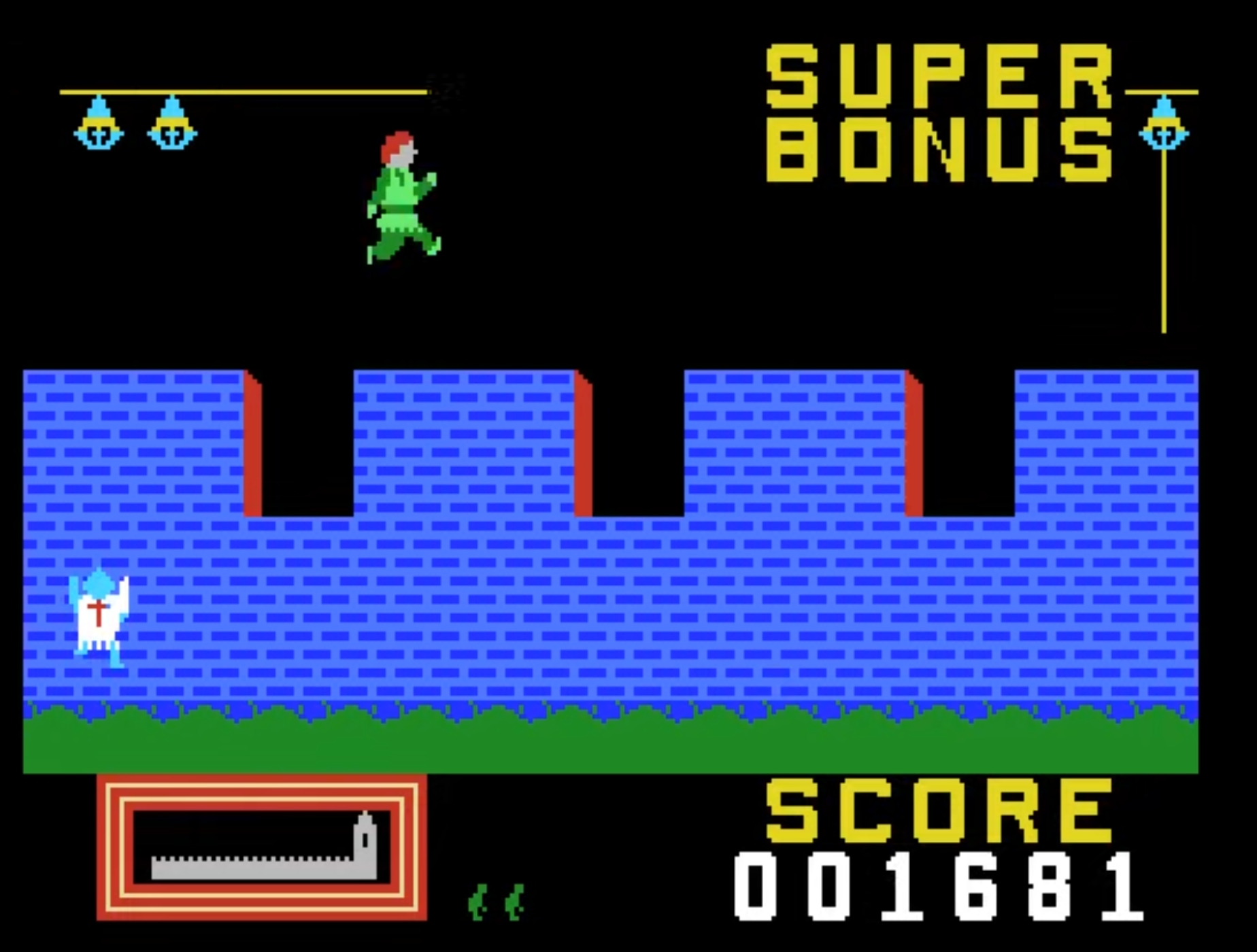
It was only a little later that I would discover it was actually… a video game that would keep me captivated for hours: long enough to help Quasimodo rescue Esmeralda!
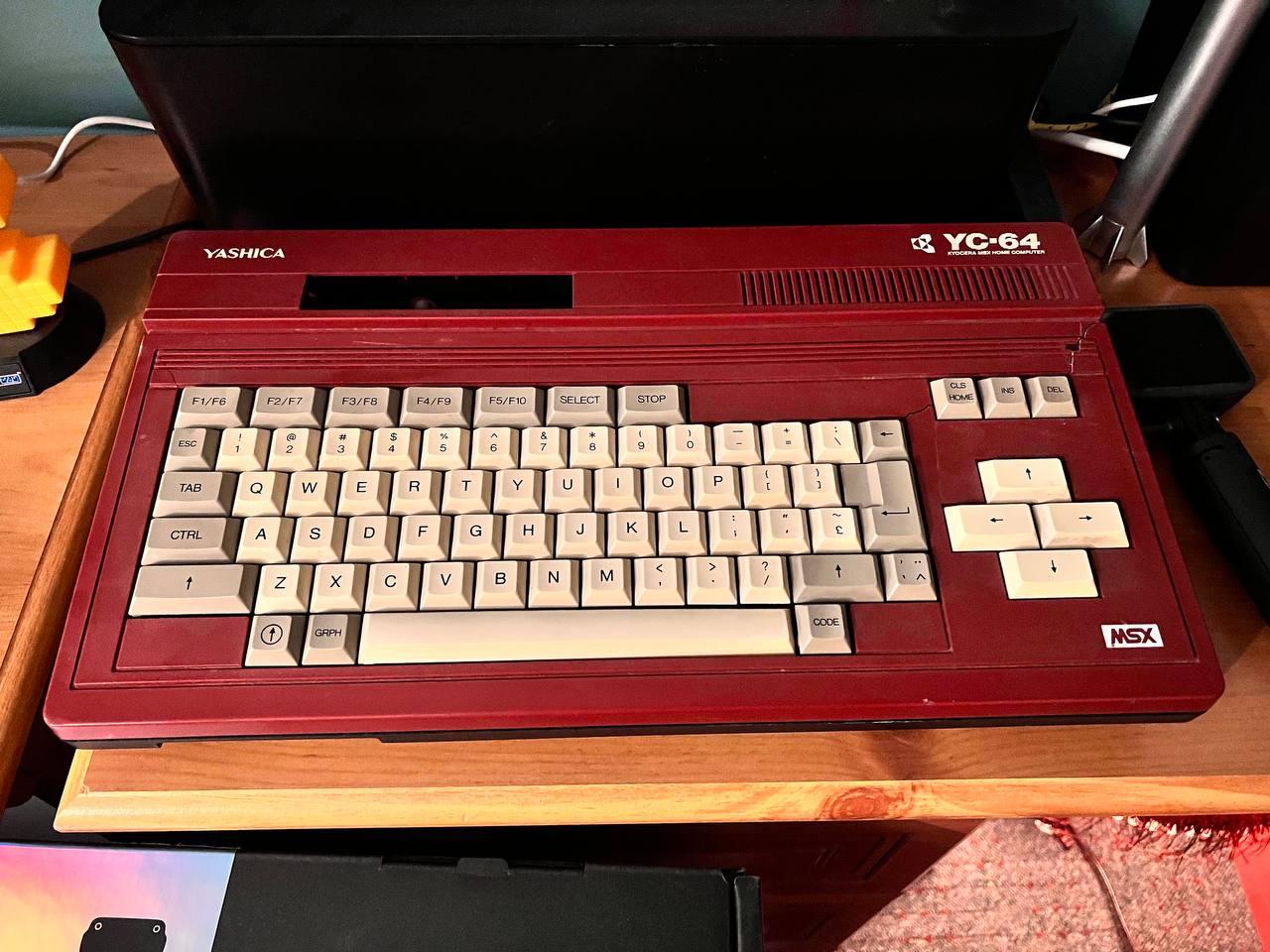
I tried to put on a brave face, I said “thank you”, but even today, almost 38 years after the “tragedy”, I can still feel the weight of that moment of disappointment. At this point in the story, you must be wondering: why all this drama? Well, a few weeks earlier, my cousin Sébastien had claimed to have seen my Christmas present, and insisted it was hidden at his house. He had told me it was a computer! I did not believe him, because I knew computers were too expensive for my parents, so we took advantage of a moment when his parents were resting and not paying attention to sneak into the cupboard where it was hidden. I saw it with my own eyes: an MSX Yashica 64. I did not know that machine, but a glimpse of part of the box was enough to sweep me away.
Fortunately, my torment would soon be cut short: a few minutes later, while I was “rejoicing” over this extraordinary present, my parents lured me into the kitchen, and there came the shock! I still remember that moment as though it were yesterday: on the table sat a magnificent, brand-new MSX Yashica 64, connected to its SCART monitor.
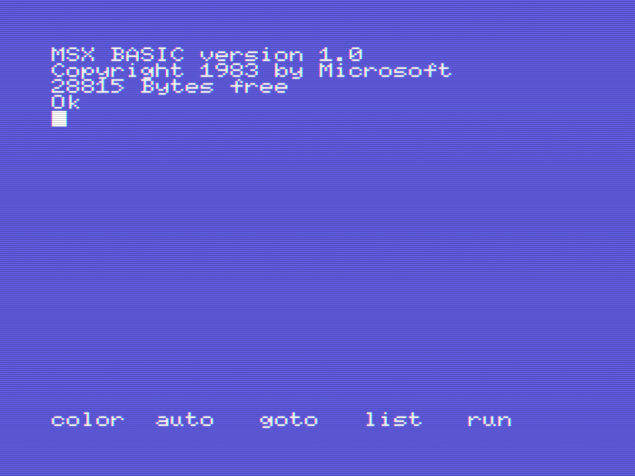
On the screen, a few lines of white text on a blue background: my first encounter with the MSX BASIC interpreter. And right at the bottom were 5 strange words: Color, Auto, Goto, List and Run. There was a reason I spent so much time telling you about Auchan earlier.
An employee responsible for ordering microcomputers had made a mistake, adding an extra 0 to the number of MSXs to buy. A disaster for the shop, but a real miracle for me. Auchan was selling those machines off for 500 francs instead of 3,000 to get rid of them as quickly as possible! My mother worked there and had heard about it, and that is how, at the age of 10, I found myself thrown into this universe!
That day also brought my first all-nighter! I spent the entire night on that machine, starting by typing the 5 mysterious commands at the bottom one by one, trying to understand what on earth they did. After long hours trying different combinations, I still remember the sense of achievement I felt when I pulled off the feat… of changing my screen’s colour with the “color” command…
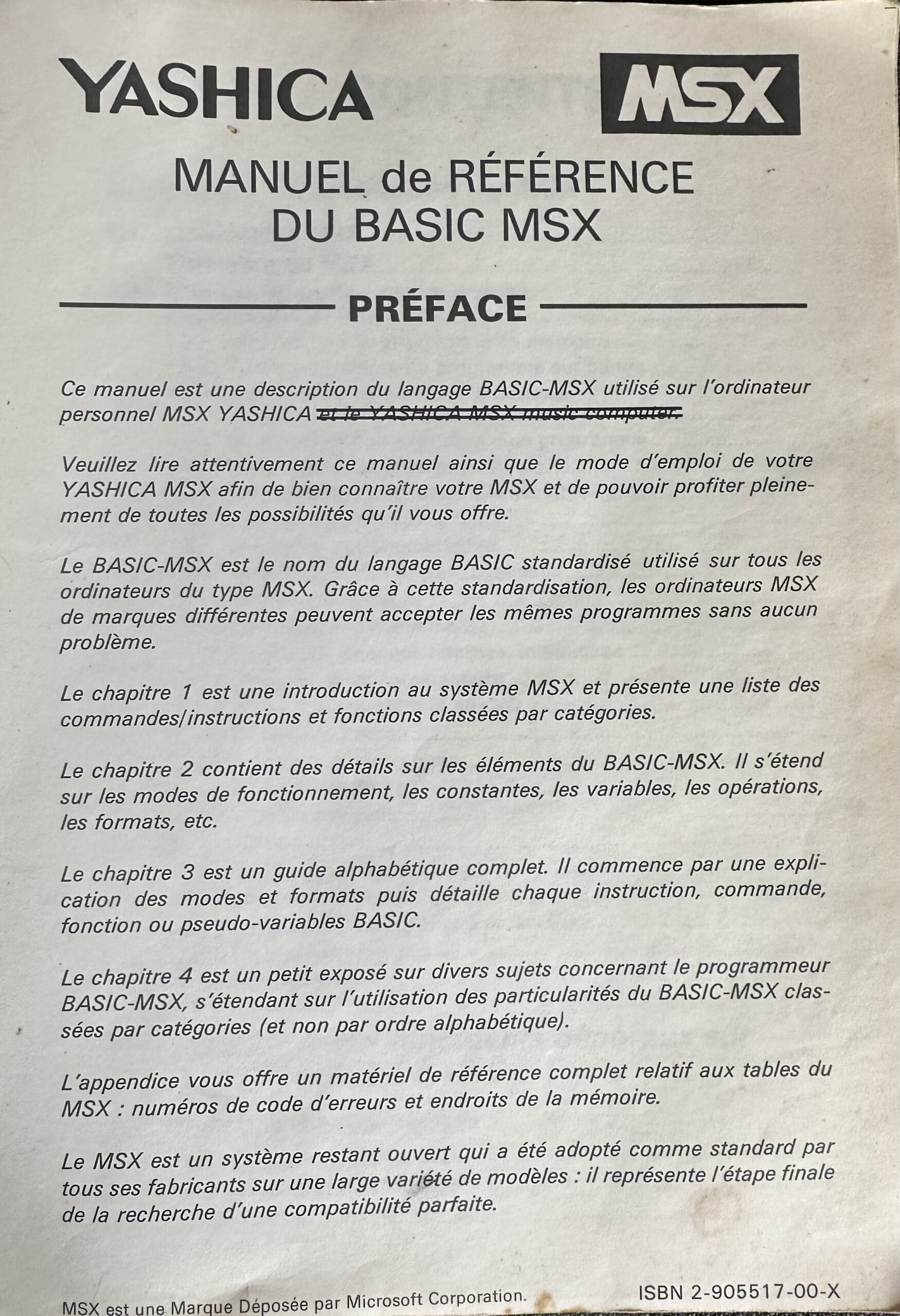
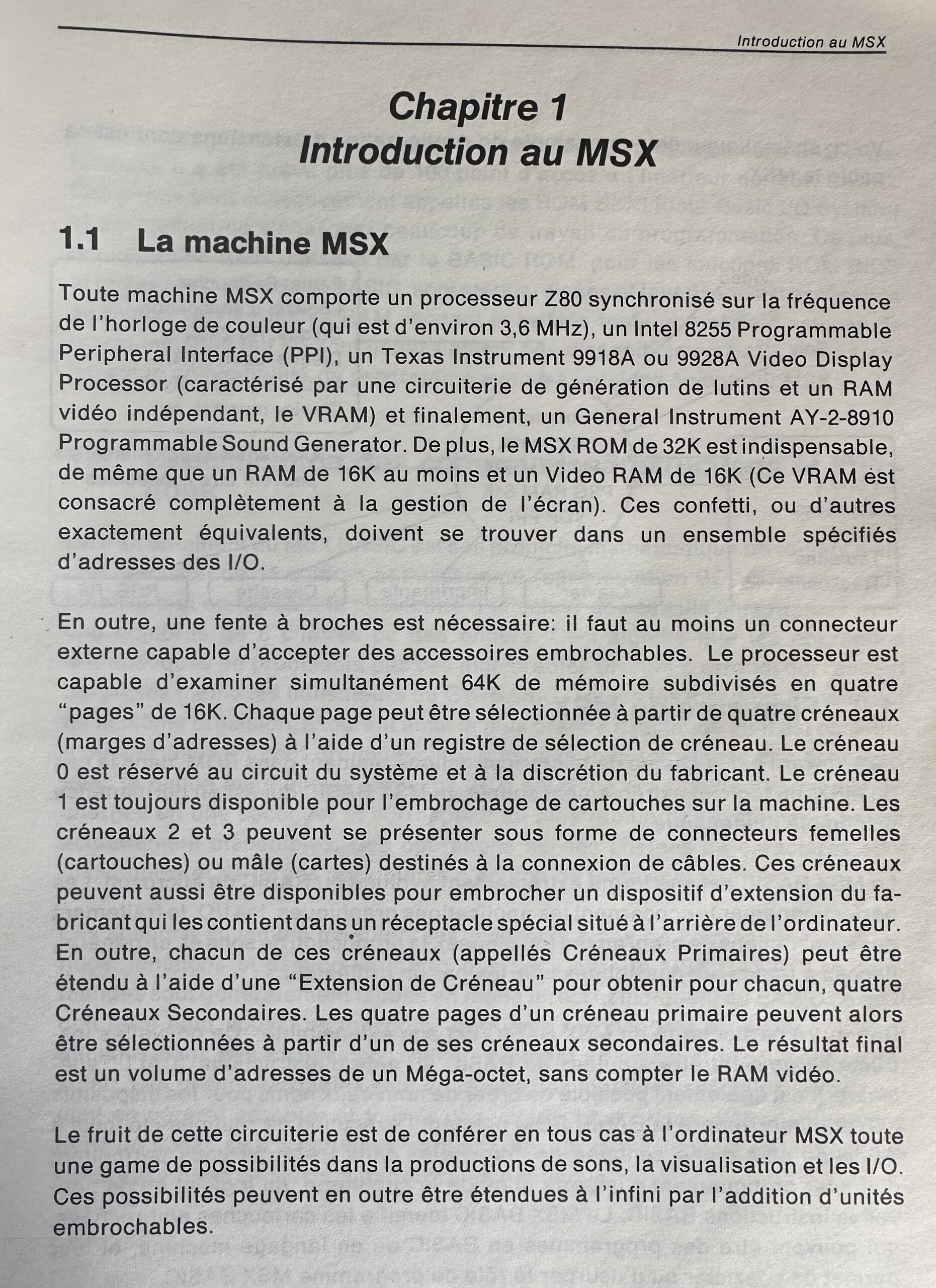
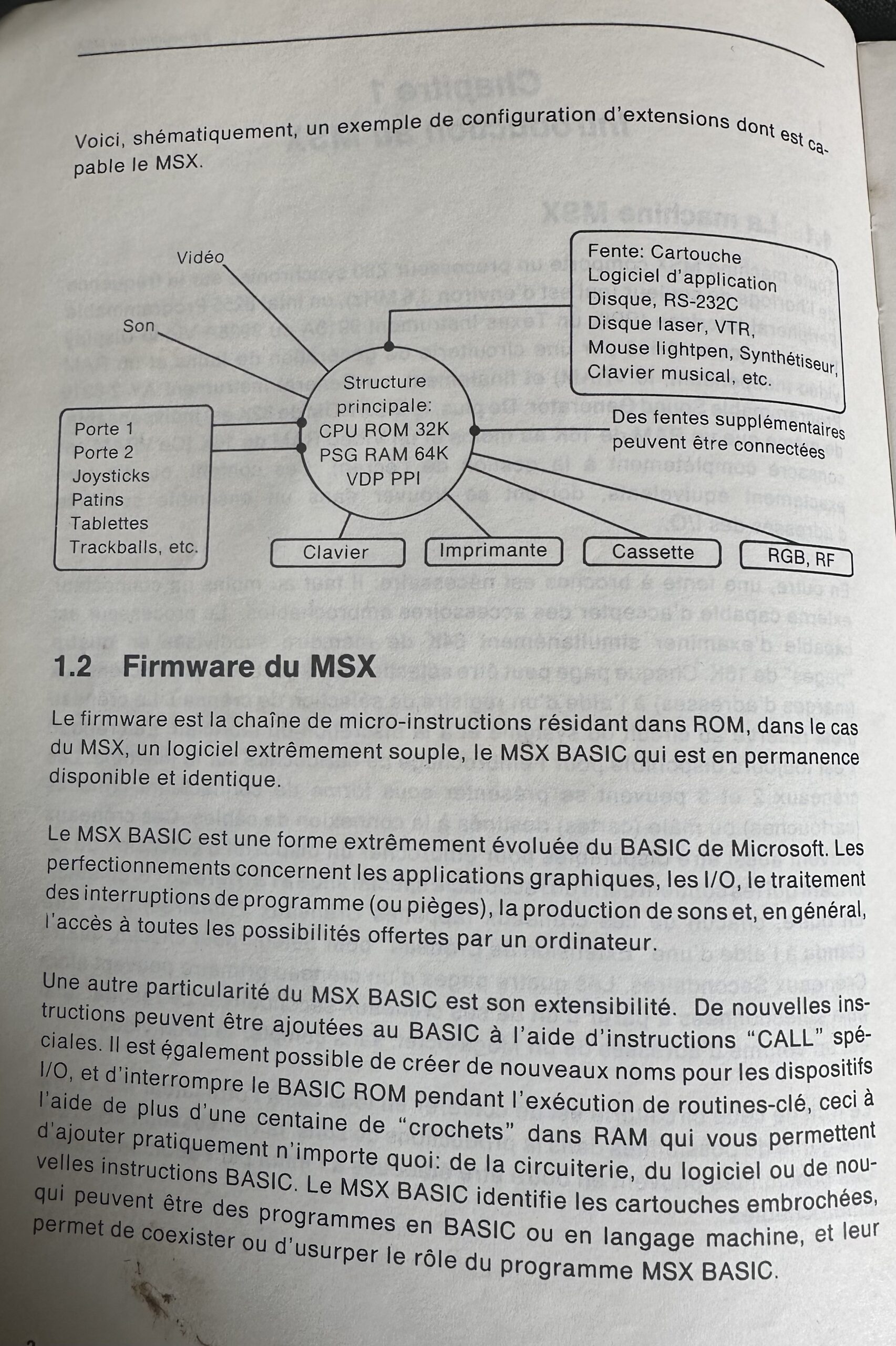
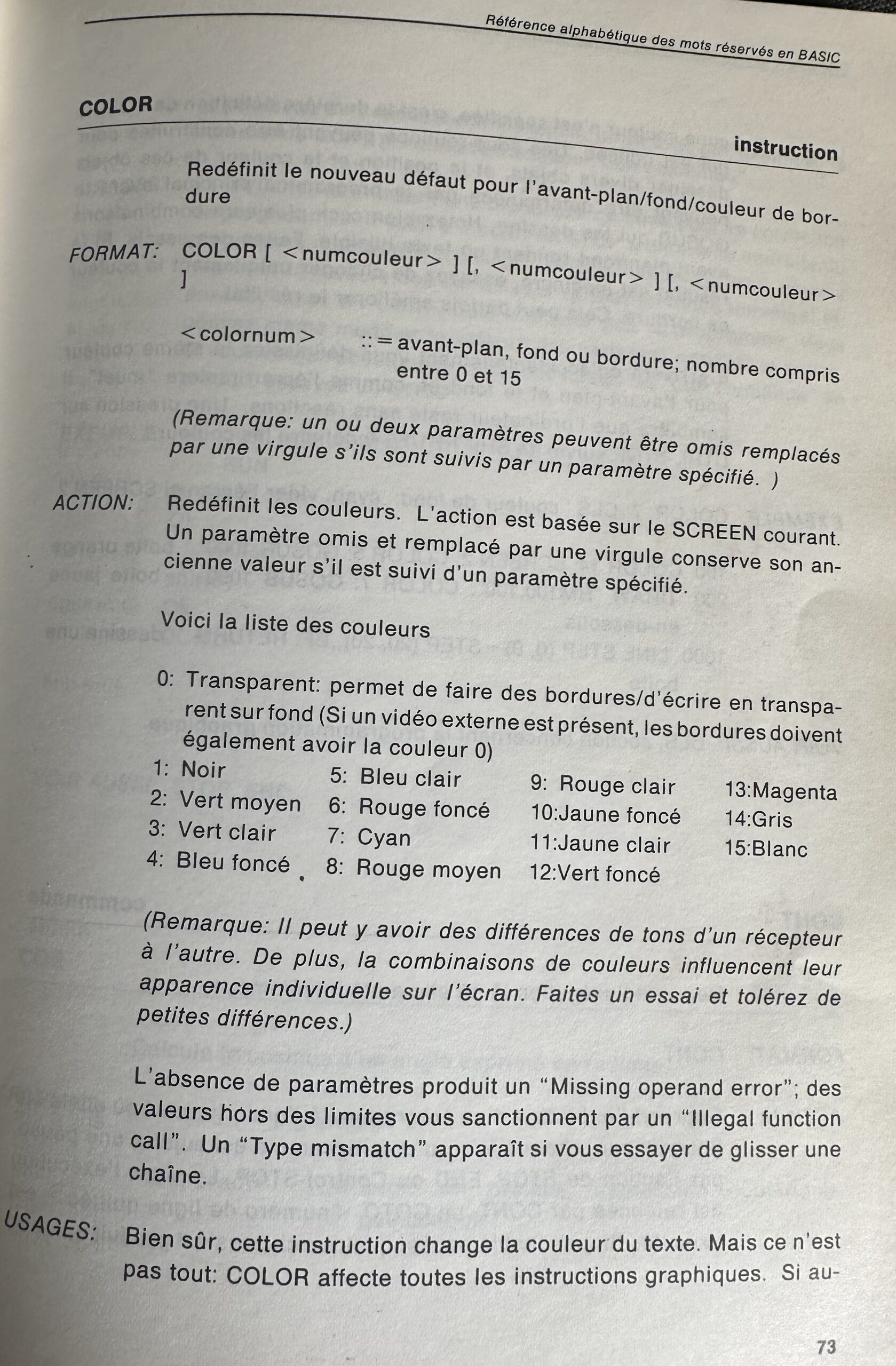
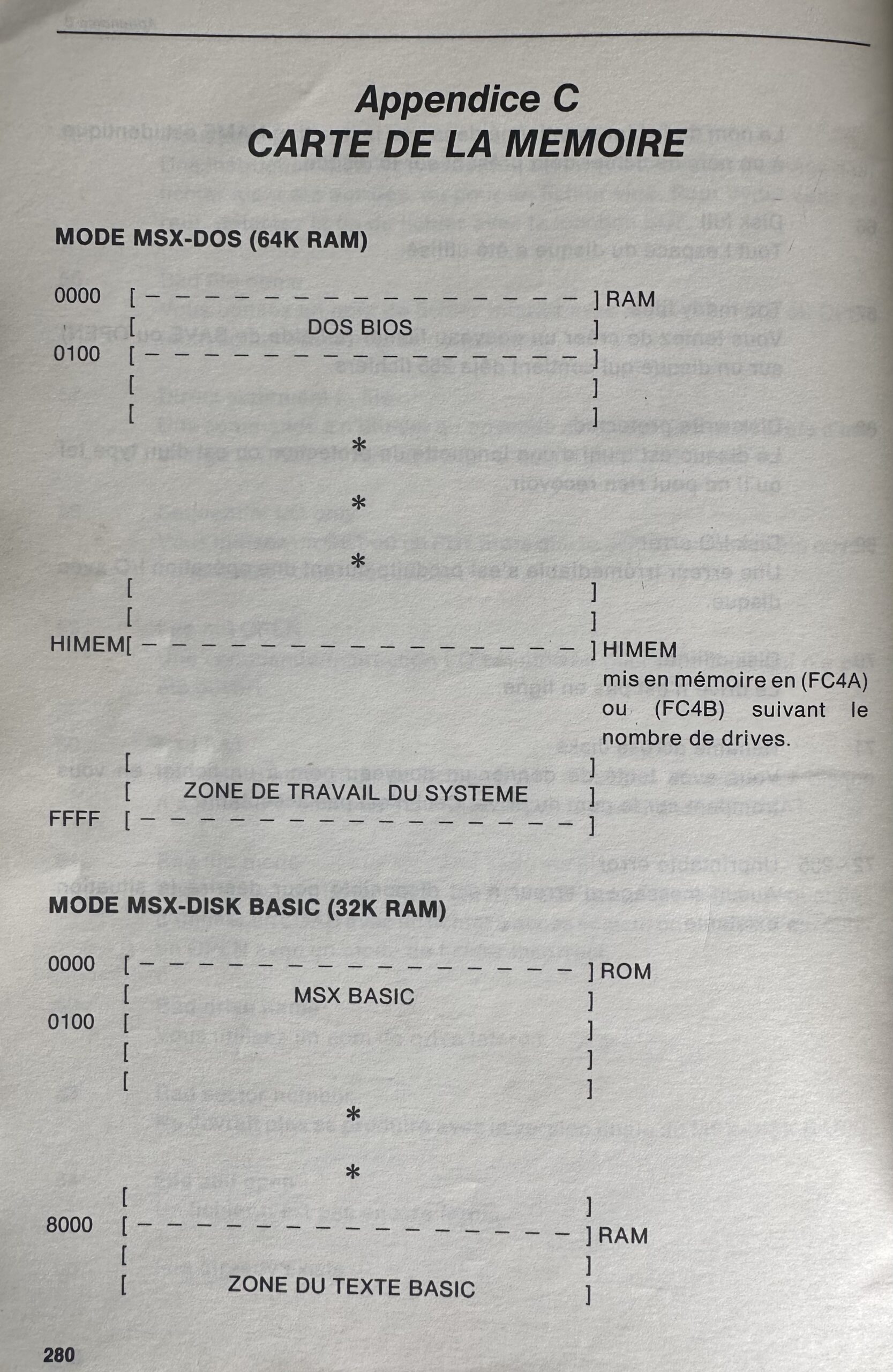
The Yashica 64 would be my main computer until 1989. On it, I would learn MSX BASIC and Z80 assembly language. It was also from that MSX that I would make my first connections, long before the advent of the Internet, using an acoustic modem that reached the blistering speed of 300 baud ;).
I would soon acquire the handle I still use today: Brain 0verride. It was a name I invented to categorise an unknown error code that kept coming up in one of my first programs. At the time, I thought it meant something more like “brain overflow” rather than “brain override” or “brain bypass”: but in the end, that suits me just as well.
Here is a recent photo (2022) of my Yashica 64, equipped with 64 kB of RAM. A real beast of a machine!
Finding inspiration
My passion for computing was also passed on to me by two films that had an enormous impact on me: Tron (1982) and Wargames (1983). I did not see them at the cinema, only years later on television.
The first tells the story of Kevin Flynn, a brilliant video game programmer at Encom. His work has been stolen by Dillinger, a more ambitious and far less scrupulous colleague, who manages to rise to the position of CEO as a result. Dillinger has created an artificial intelligence program, the MCP, that feeds on other programs. With the help of two friends, Flynn then tries to break into Encom’s computer system to find evidence of Dillinger’s wrongdoing.
During his quest, the program developed by his adversary dematerialises him and projects him into “the Grid”: a digital world inhabited by programs bearing the avatars of their creators. Flynn must then face the formidable MCP (Master Control Program), translated into French as Maître Contrôle Principal, which seeks to take control of every system on the planet while ruthlessly hunting down all programs that still believe in the myth of the User.
Several programs help Flynn in his quest, including Tron: a security program written by his colleague Alan, supposedly capable of disconnecting the MCP.
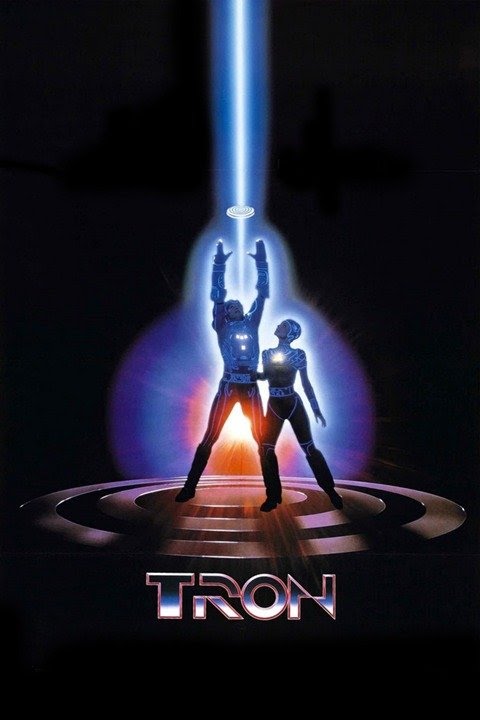
I still have a perfect memory of the moments when I was writing my first bits of code on the MSX: I imagined being able to project myself straight into this new universe and interact with my programs, just as Flynn could.
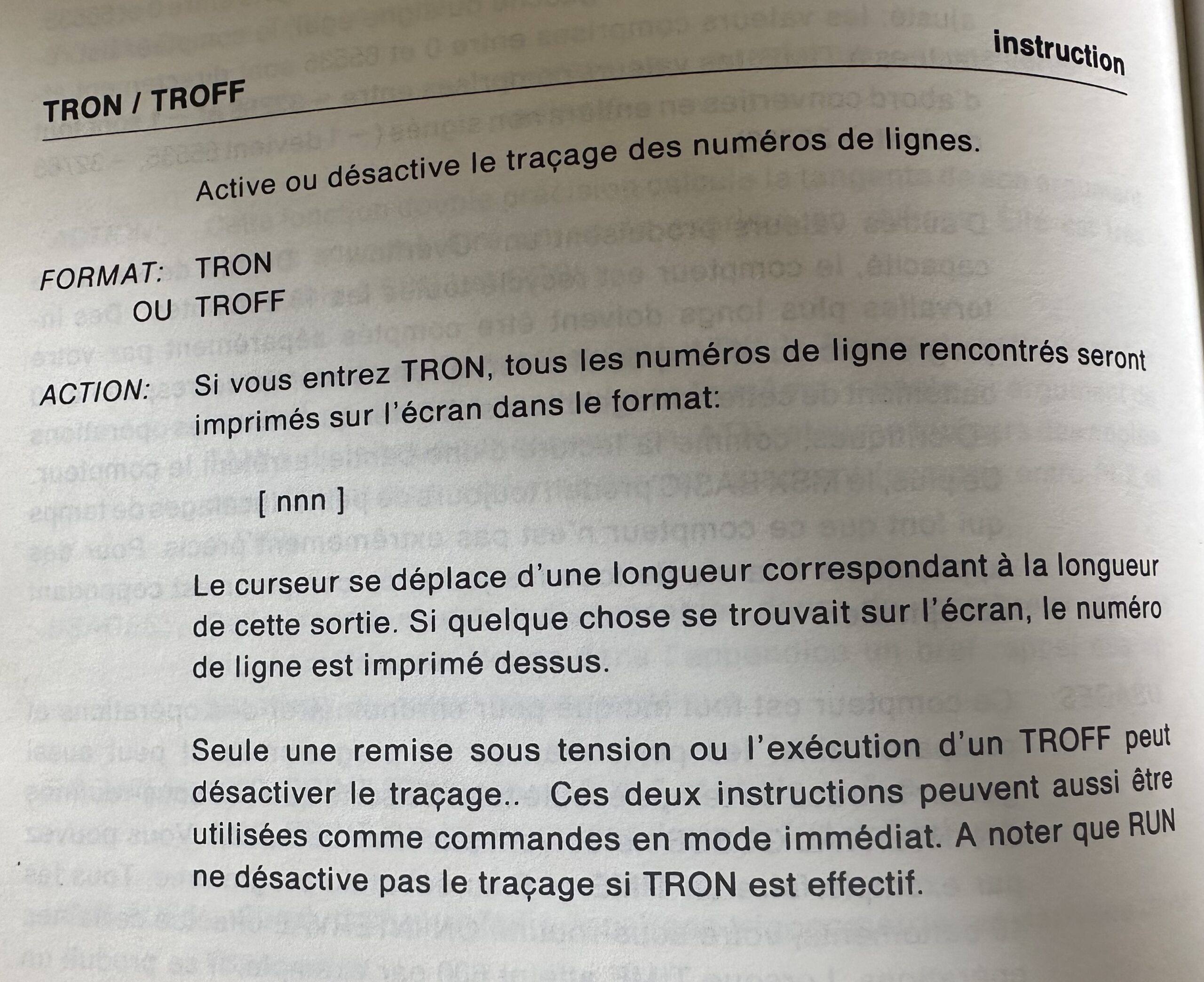
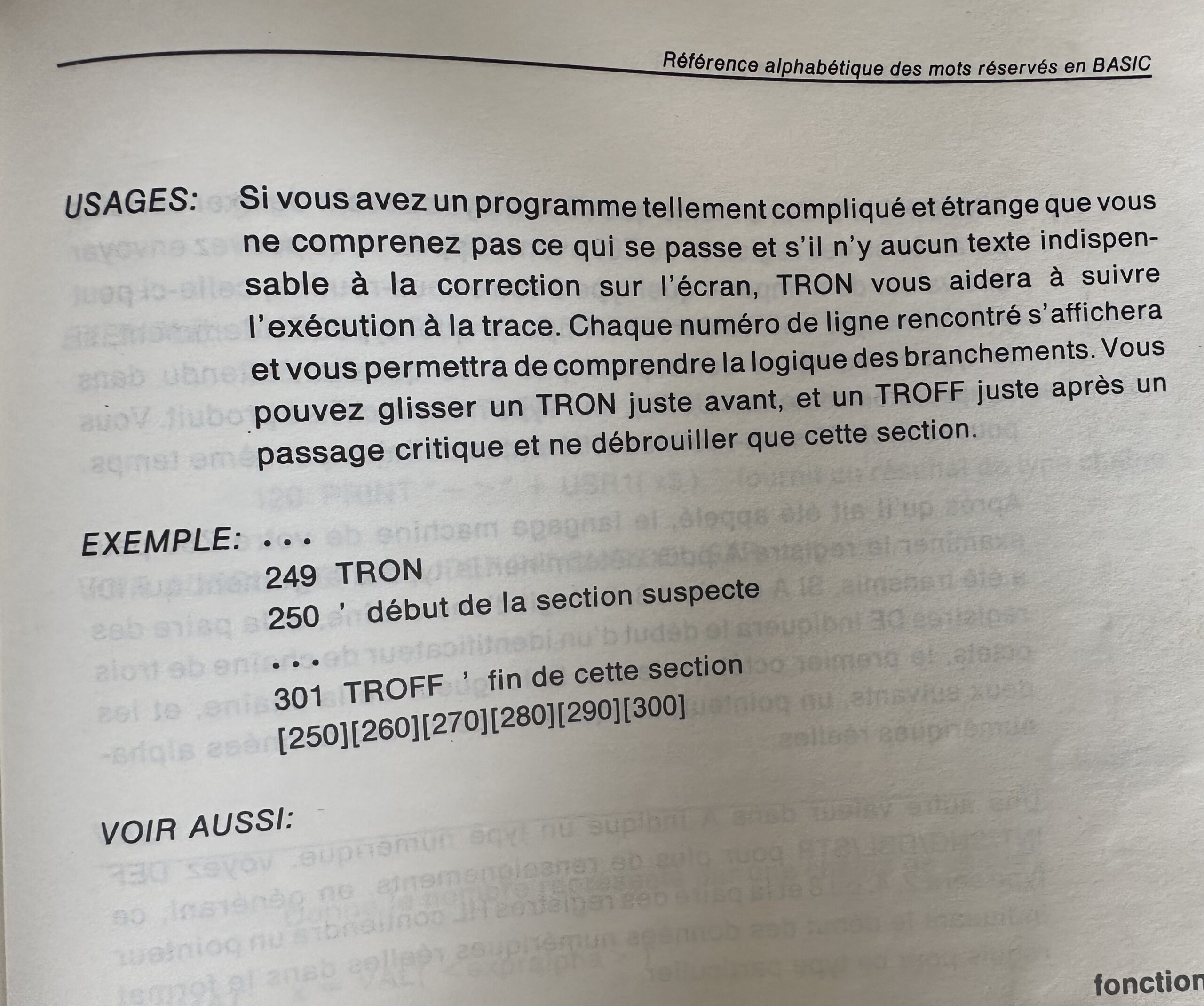
In fact, one of the first programs I wrote was called TRON, after the film of the same name. And an interesting little detail: “tron” was also an MSX Basic instruction, used for debugging along with its little brother “troff”.
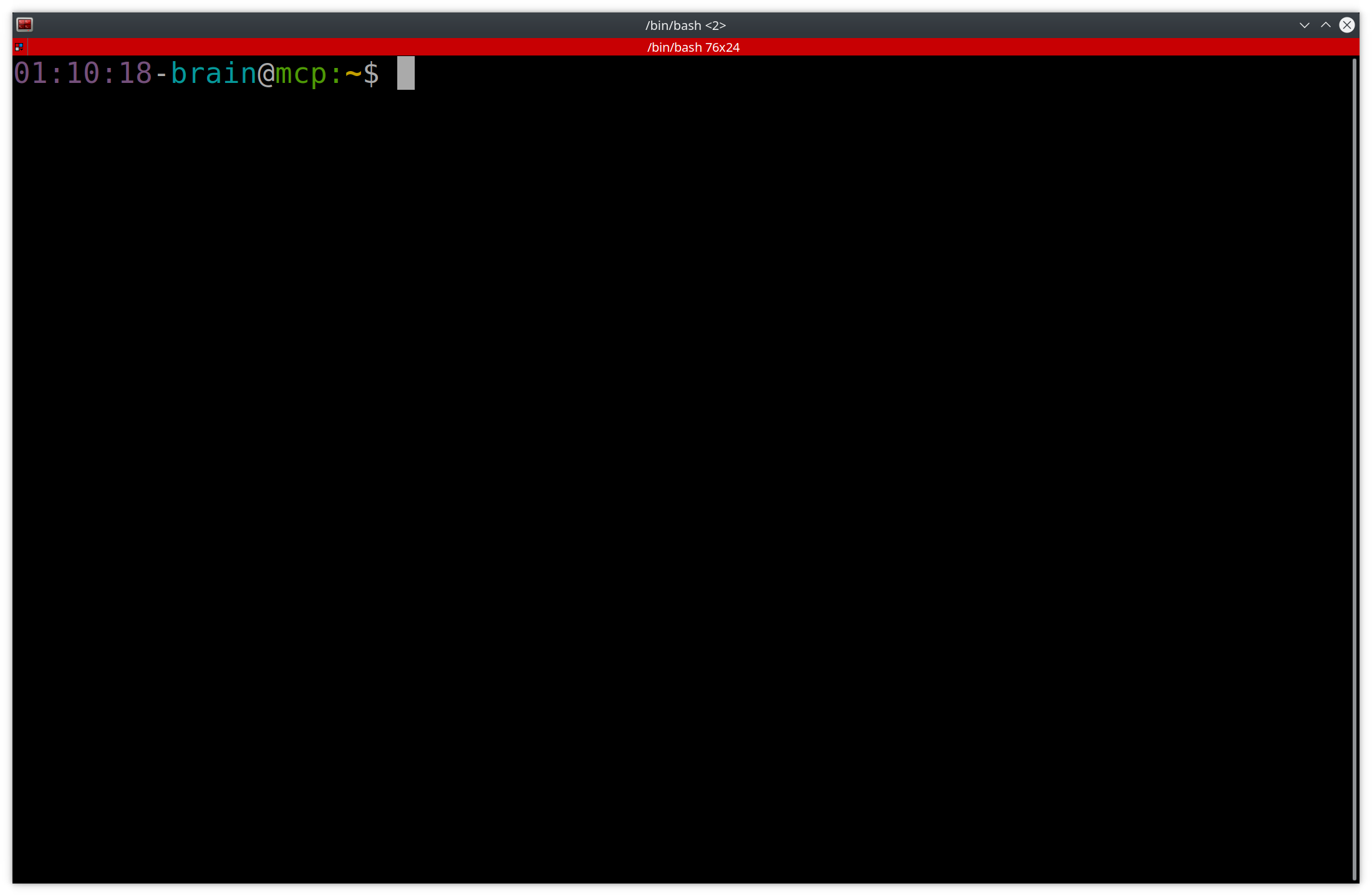
I am not ashamed to admit it: I often talked to my machine or to my program… And often, the result would leave me dreaming that they really understood me… This film is also where I got the hostname I still use for my main machine today, whose prompt you may already have glimpsed in some videos:
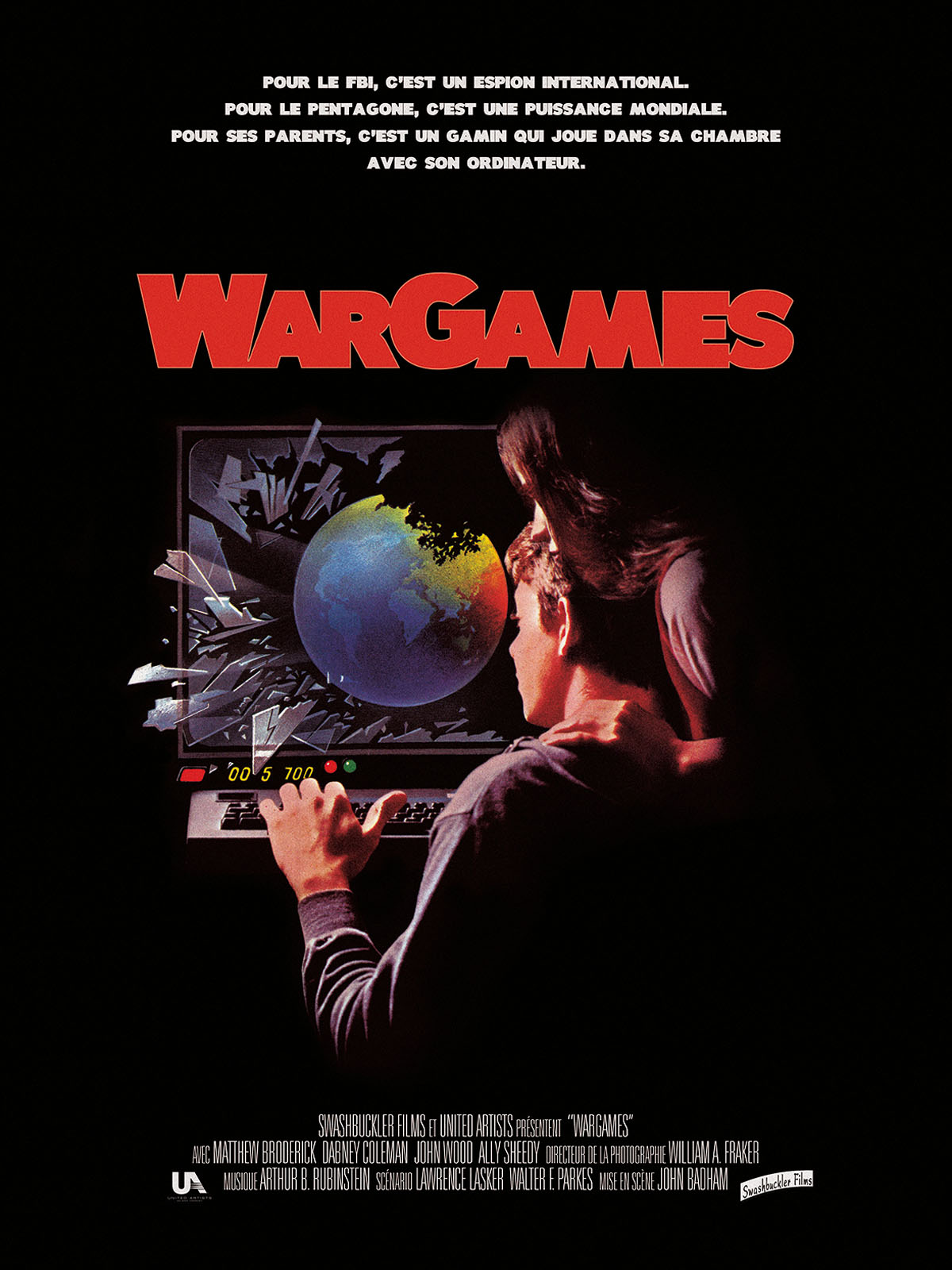
Wargames, meanwhile, plunges us into the Cold War. David, a young computer enthusiast, thinks he is breaking into a video game company, but instead accesses a NORAD “supercomputer”, the WOPR, driven by Joshua: an artificial intelligence developed by Professor Falken, a scientist who has since left NORAD and lives as a recluse in the countryside. Joshua can play noughts and crosses and chess, but it can also simulate global nuclear war and has the ability to launch the missiles directly.
That film also inspired this video:
Special mention: it features a fine demonstration of wardialing, a technique I had the opportunity to use for many years before the advent of the Internet. This film was one of the sources of my interest in hacking and cybersecurity in general.
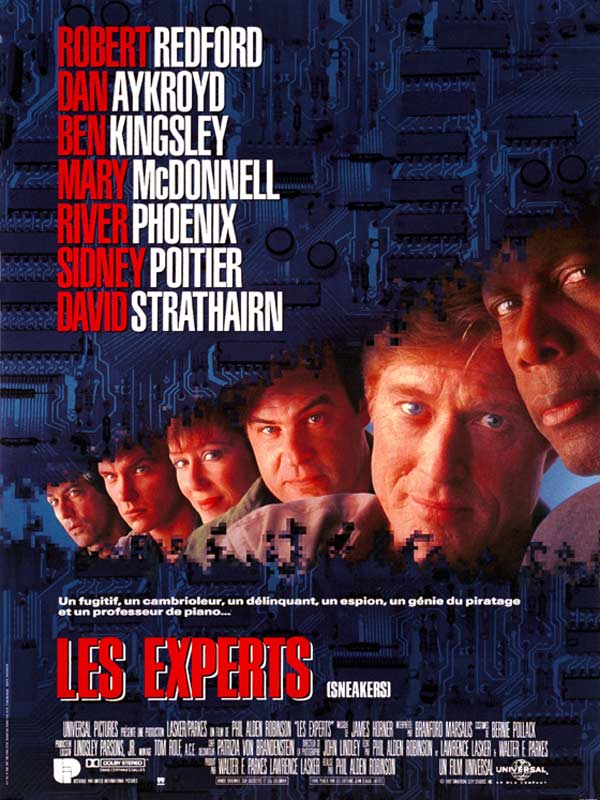
Finally, another film inspired me too, not at the beginning, but years later. This was the film that really gave me the idea and the desire to set up my own company: “Sneakers”.
In it, Martin Bishop (played by Robert Redford), a former hacker, leads a team of experts specialising in pentesting. Tracked down by the intelligence services, he is forced to accept a risky assignment in which he must steal a “black box” capable of breaking any encryption system. I will not spoil the film for you. It has a star-studded cast, so treat yourself and watch this gem :)
Discovering
I spend a lot of time on my machine, but also at friends’ houses, where I get to try other computers such as the Amstrad CPC (thanks, Cyril V.), the Oric Atmos (thanks, Jean-Yves M.), and later the Atari ST (thanks, Eric S.) and the Amiga.
Throughout that period, I discover BBSs, networks such as GTI (which linked nearly 2,000 computers together, a huge network at the time!), software protection, demomaking and other languages such as GFA Basic and 68000 assembly language…
It is also when I start what is, in a way, my first “business”. Local BBSs ran “contests” in which the first person to provide the crack for a video game was rewarded. I was not the best at it, although I can boast of having written the first working crack available in the south of France for Chaos Strike Back on the Atari ST. I had discovered it was far more lucrative to get other enthusiasts I knew from school to do the work in exchange for a few coins.
At the same time, I had also begun to develop a taste for hacking. A few years earlier, I would break into the computer system of the local hospital in La Ciotat.
To prove to my uncle, who worked there, that I had pulled off this “feat”, I give him the system’s name and a precise description of the menus, folders and options available in it. I also show him detailed, confidential information about a few patients. The system is called CATI (I am no longer sure of the spelling), and I have just compromised its security: yes, that’s it, I have become a real hacker!
I also write my first “computer virus” on the MSX, which claims just one “victim”. Dear Yves R. (PS: no, this is not Yves Rougy), I hope you did not hold that moment of “misjudgement” against me. I load the malicious code onto a tape at the beginning of a game my first victim had previously lent me, then load the game back on top of it. Once loading is complete and the user starts the game with the “run” command, a message appears explaining that the game’s code will be lost unless they follow the instructions on screen, which ask them to insert another tape to infect and follow a whole procedure.
He calls me as soon as the message appears, and a few seconds later, I give him the instructions to fix the problem. The story ends there and, to my knowledge, there were never any other infected tapes.
Exploring
In 1989, I sense the tide turning in computing. Although I was rather tempted, especially for video games, to move to a machine such as the Atari ST or the Amiga, I ultimately choose a PC. I am convinced that, despite lagging behind technologically in several areas, the PC will win the “war” of the machines. That intuition is strong enough to make the choice firm and final.
To give you an idea: my first PC could barely display 4 colours in CGA, while an Amiga, despite being much cheaper, could display 4,096 on screen in HAM mode. My old 8-bit MSX was already capable of displaying 16…
Then comes my birthday in 1989. My parents had been dreading that, like other young teenagers my age, I would ask for a moped. What a relief for them when I announce that I want a PC! I still wonder whether, at that moment, it made them even happier than it made me ;)
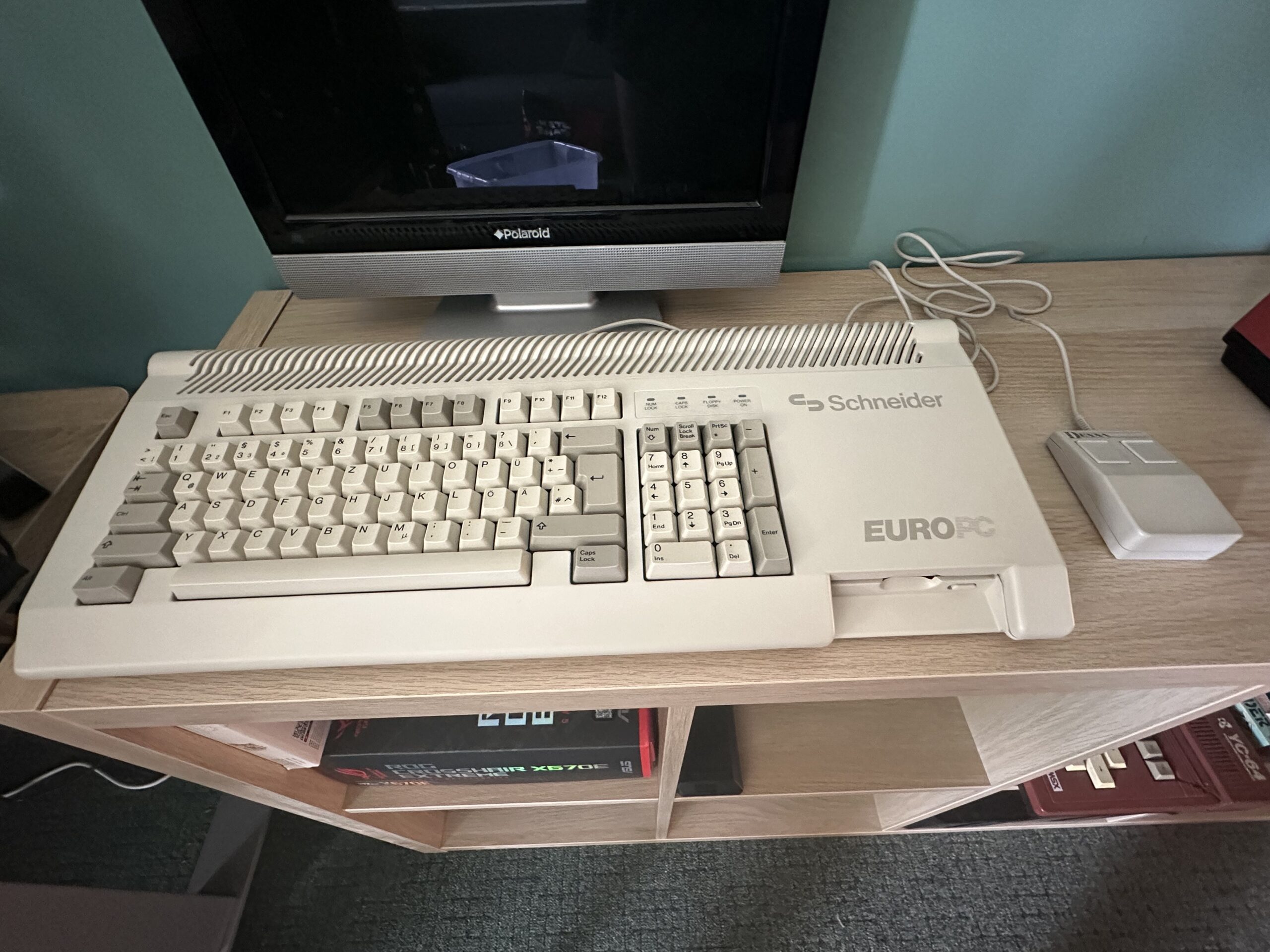
Off to NASA électronique on Avenue Cantini in Marseille, returning with a Euro-PC Dual data (Schneider), equipped with an Intel 8088 processor, 512 KB of RAM, a 720 kB floppy drive and the MS-DOS 3.3 operating system.
Below is a recent photo from 2022: this is not the original, but a similar model I bought on eBay.
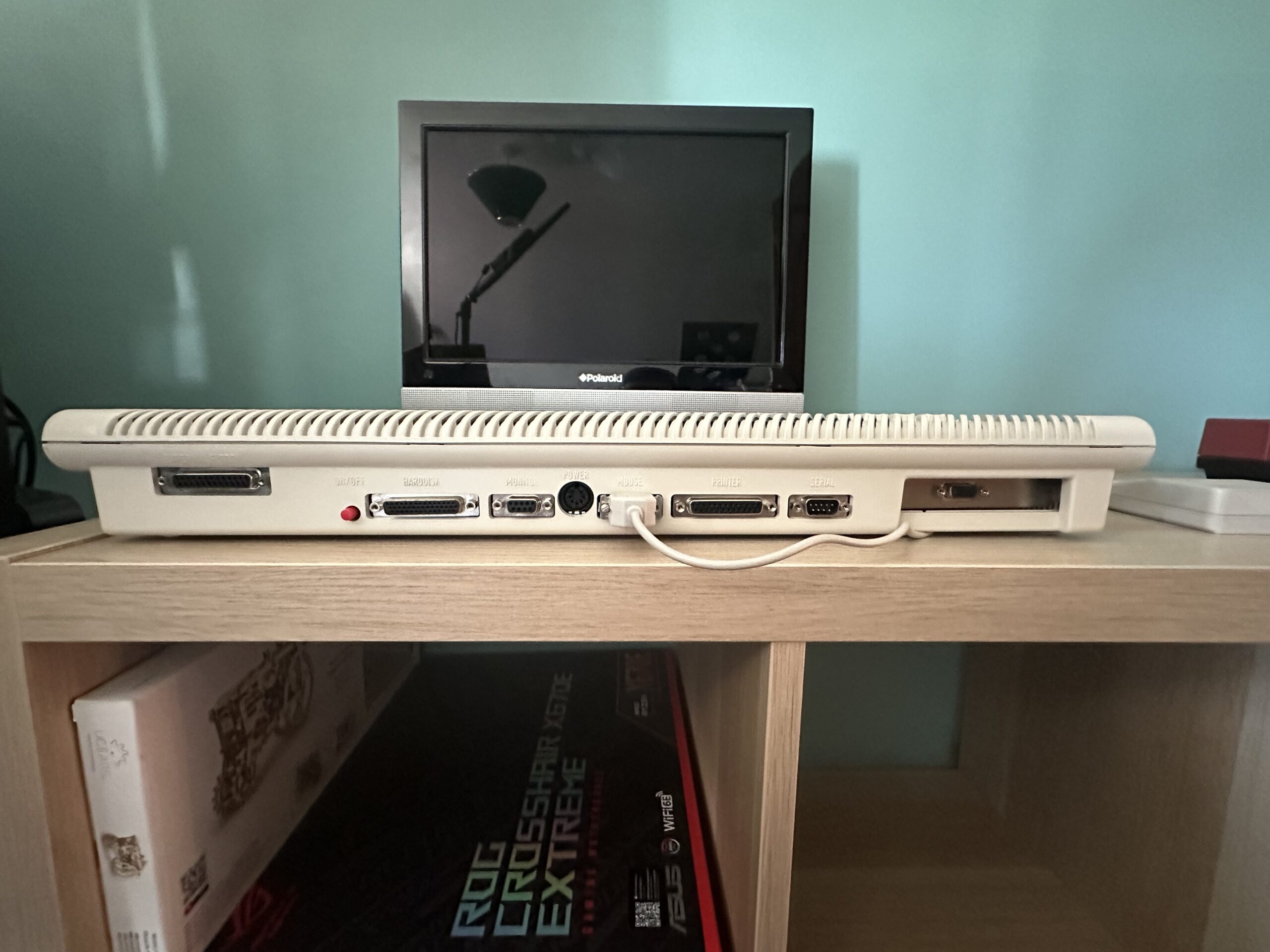
It comes with Microsoft’s “Works” office suite. Here is a photo of the original floppy disks supplied with the machine:
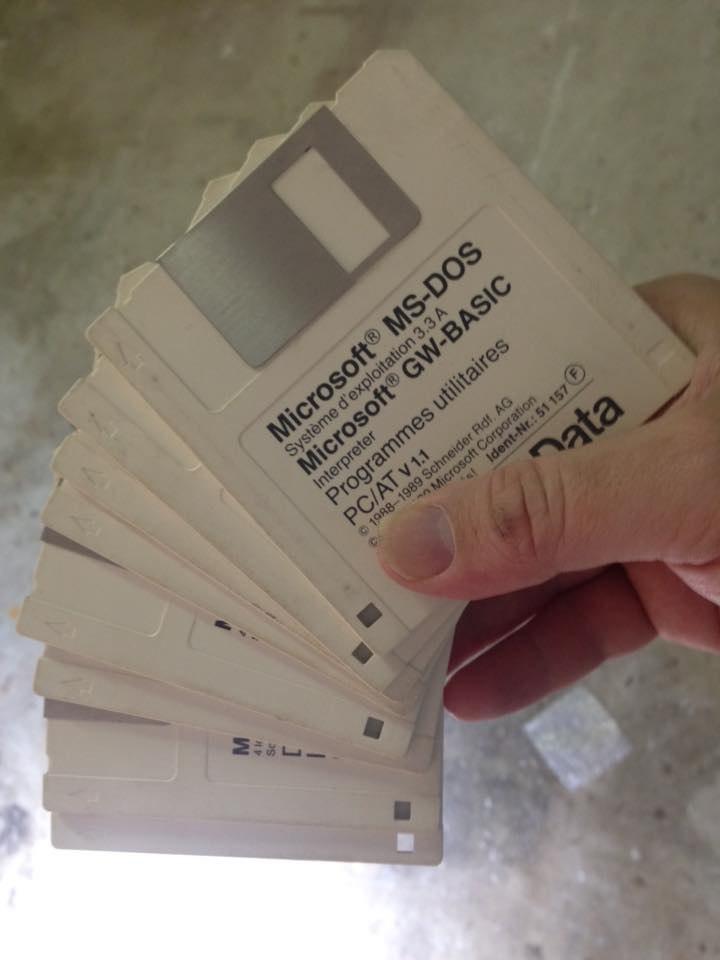
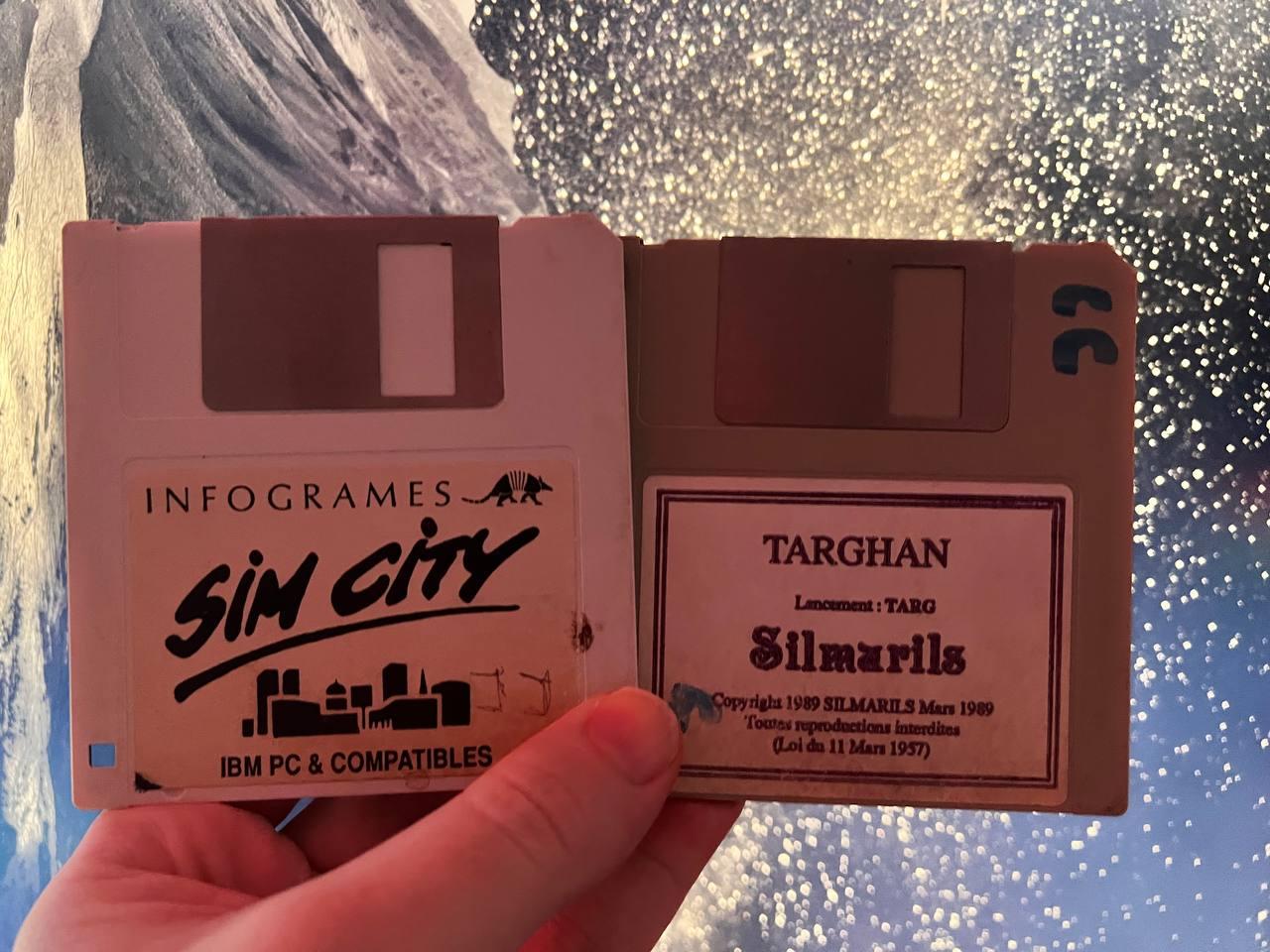
My first two PC games are bought along with it: Sim City and Targhan by Silmaris.
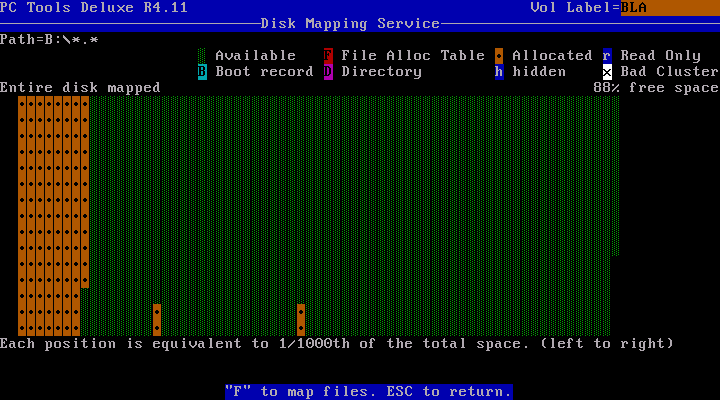
I also discover the excellent PC Tools, a real “Swiss Army knife” that can serve both as a file management tool and as a hex editor, followed a few years later by Norton Commander.
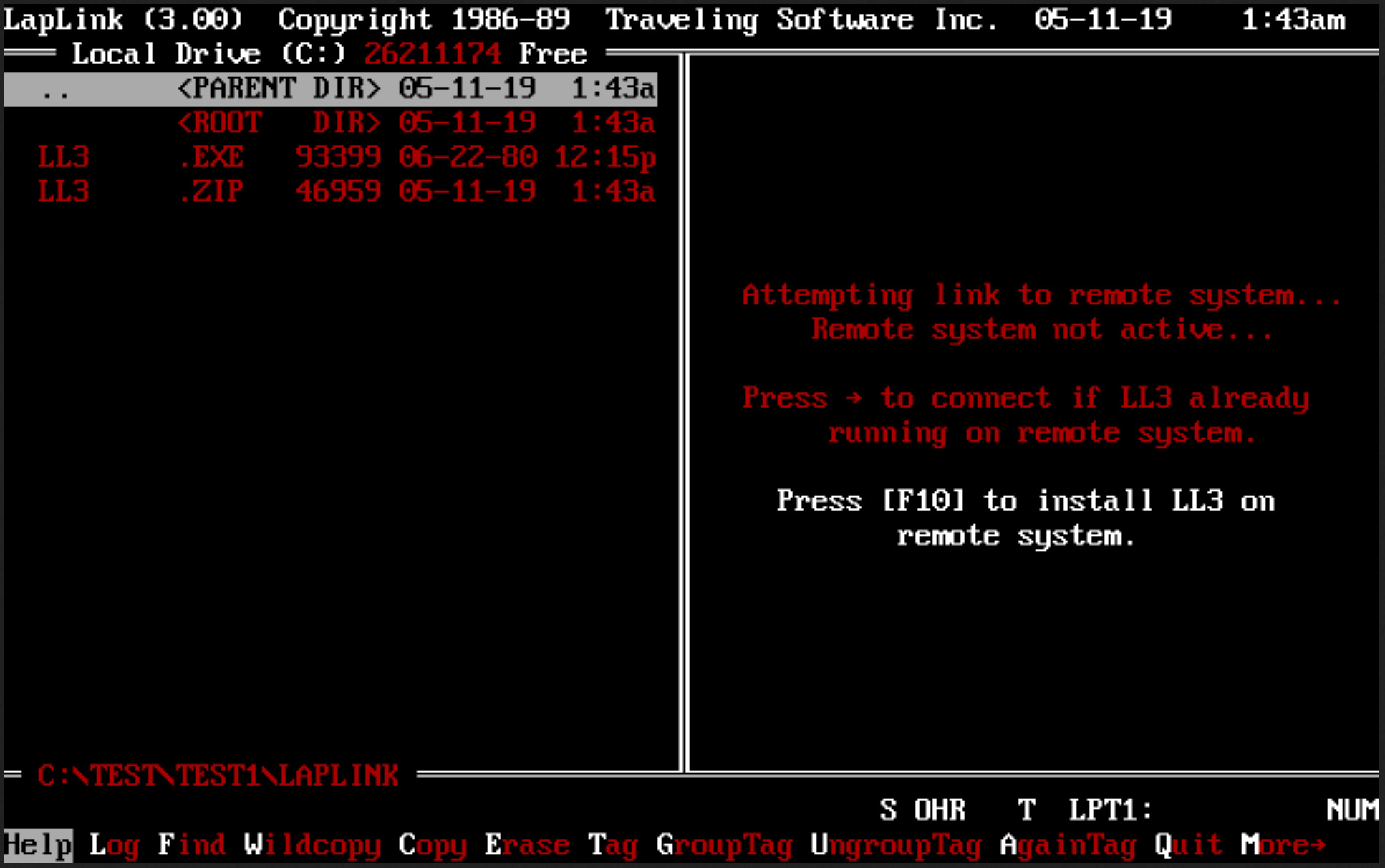
Communication between two personal computers starts to become commonplace with null-modem (serial) and null-printer (parallel) cables. Some of you probably remember “LapLink”, which made it easier to exchange files through the latter. As for me, I made null-modem cables out of telephone cables :)
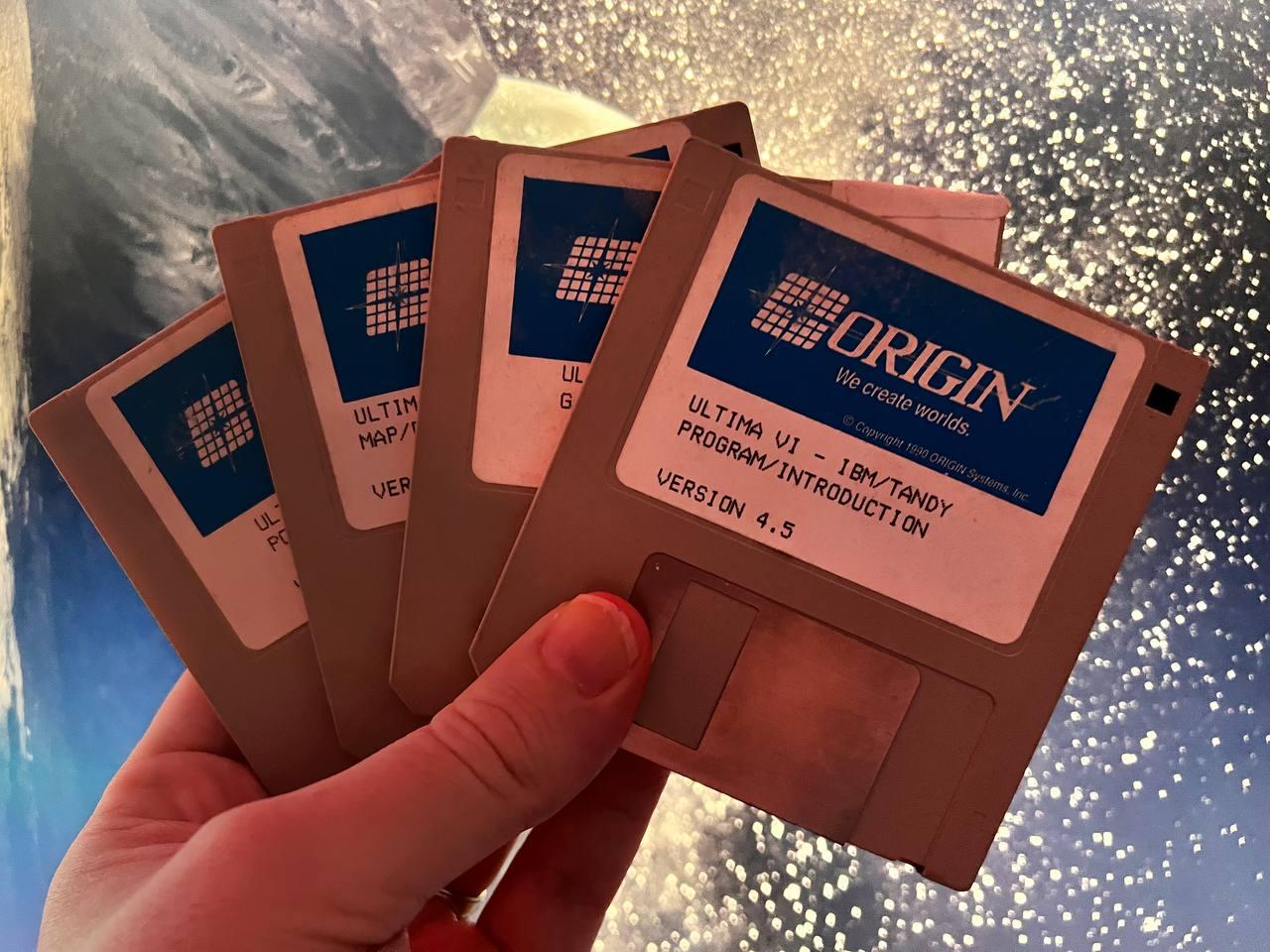
On 1 June 1990, Ultima VI is released, and I rush out to buy it… Unfortunately, it needs 640 kB of memory to run, and I only have 512 kB. 6 months… that is how long I spend waiting to get a 128 KB expansion card. During those 6 months, I pick apart every possible way of saving memory, particularly through config.sys and autoexec.bat.
Every time I manage to claw back a little memory, I get to see another 1 or 2 seconds of the game’s introduction. It is the only video game whose documentation, like the cloth map supplied with it, I knew by heart several months before playing it.
I still have the original floppy disks, which, along with books and other items from that era, suffered badly in a flood we experienced a few years earlier.
Thanks to that memory constraint, and after testing hundreds of different configurations, I had acquired new skills that made me the “king” of conventional memory optimisation.
The years pass, as do the machines I get to lay my fingers on: Intel 8088, 8086, 386, 486, Pentium 60, Pentium 90, Pentium 200MMX, Cyrix 200, K6-3D, Sun workstation, RS6000, HP9000, and many more…
This is also when, every day, I discover new platforms and systems, each more fascinating than the last: from AIX to OS400, via SunOS, SCO, OS/2, VMS, Telsis and many others…
Growing up
A little step back in time: during those years, I develop my skills in bypassing software protection, and in systems and network security. In 1992, with a small group of pupils from different classes and a maths teacher, Mrs Edmont, we create the computer club at Lycée Lumière in La Ciotat.
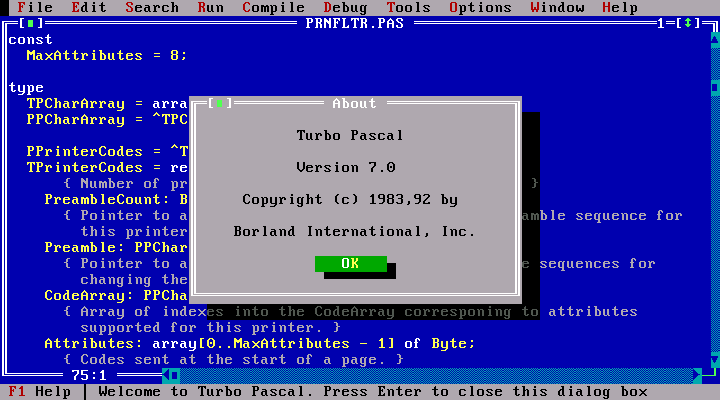
That is where I discover Turbo Pascal, but it is also where I quickly learn to get around Novell NetWare in order to steal my teacher’s Supervisor privileges. After several attempts to take them back from me and fix the system’s security, she eventually gives up and lets me keep them… The best programmer in the group is a woman; Michèle, if you ever happen to read this, I do not know what became of you, and I have forgotten your surname, but not your programming skills back then. I am curious to know whether you stayed in the field: get in touch ;)
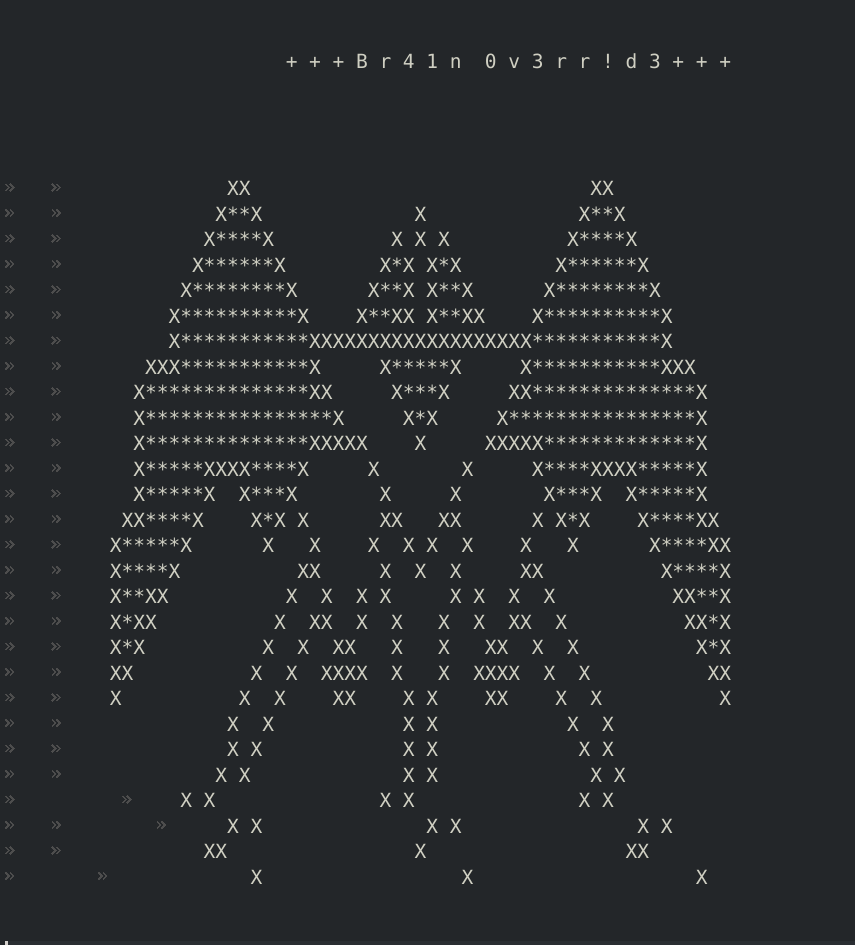
At the same time, I found “CyberHack”, and I have the privilege of being one of the few people (fewer than ten of us) with access to a private server in Northern Europe, where we talk over telnet and exchange our latest privately discovered vulnerabilities.
The phoenix is my symbol. I leave it behind as “proof of passage”, and also use it on my website and in my publications. It is the ancestor of the logo I would create a few years later for my Digital Network website.
It is also the name of my first website. I will spare you the details of its activities, and I have not managed to find any trace of it in the web archives. Perhaps one day on an old hard drive: I would love to get my hands on at least the last version, with the “spinning skulls” and the flames (laughs…).
The years pass… off to Paris by plane with my best friend at the time (hi, Julien C., if you ever happen to read this), to buy my first PC with an Intel Pentium processor: the Pentium 60. It may sound incredible today, but back then it cost (much) less to travel to Paris to buy a PC, travel included, than to buy one from a local dealer!
Free
In 1995, I buy a book, “Le grand livre d’Unix”, from Micro application. I was already interested in Unix systems, but free software and the GNU/Linux operating system were still completely unknown to me.
I only knew freeware and shareware, through DP Tool Club, but this book… would change everything. This is a photo of the original copy I still own, taken at my home in June 2022:
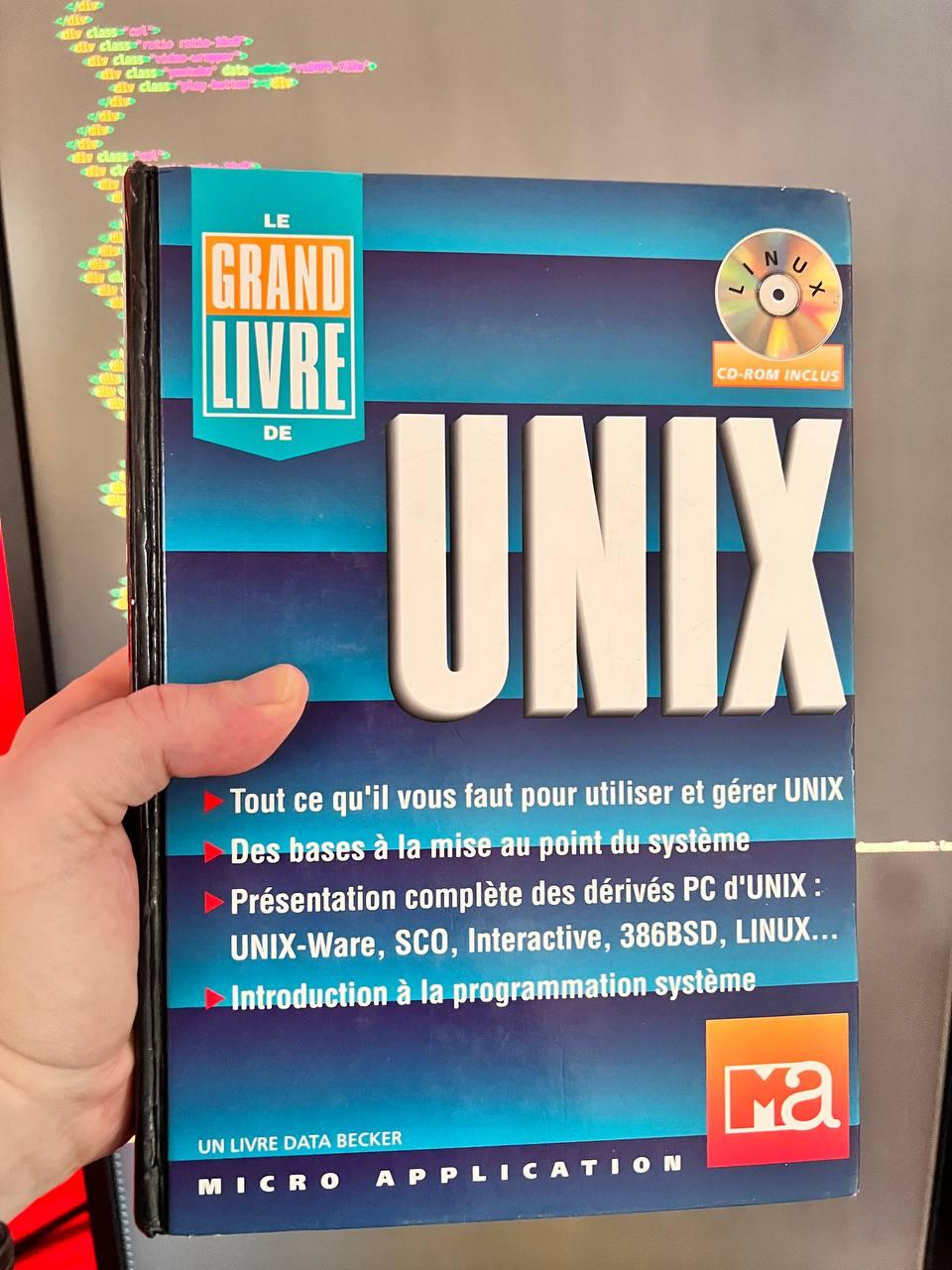
I will not dwell on the book’s excellent quality, which still makes it entirely relevant today in many areas.
What really made the difference for me was the CD-ROM that came with it. Among other things, it contained the Slackware Linux distribution: a discovery that would change a significant part of my life, given the considerable amount of time I devoted to computing.
NB: Installing it did not mean booting from a CD, but creating floppy disks from the material supplied on the CD so that you could install it.
I was immediately won over, and almost fascinated, by the extraordinary potential offered by the 4 fundamental freedoms of free software: the freedom to use it, copy it, study it and, above all, modify it as you pleased, while retaining the possibility (and sometimes the duty) to redistribute it.
Leaving
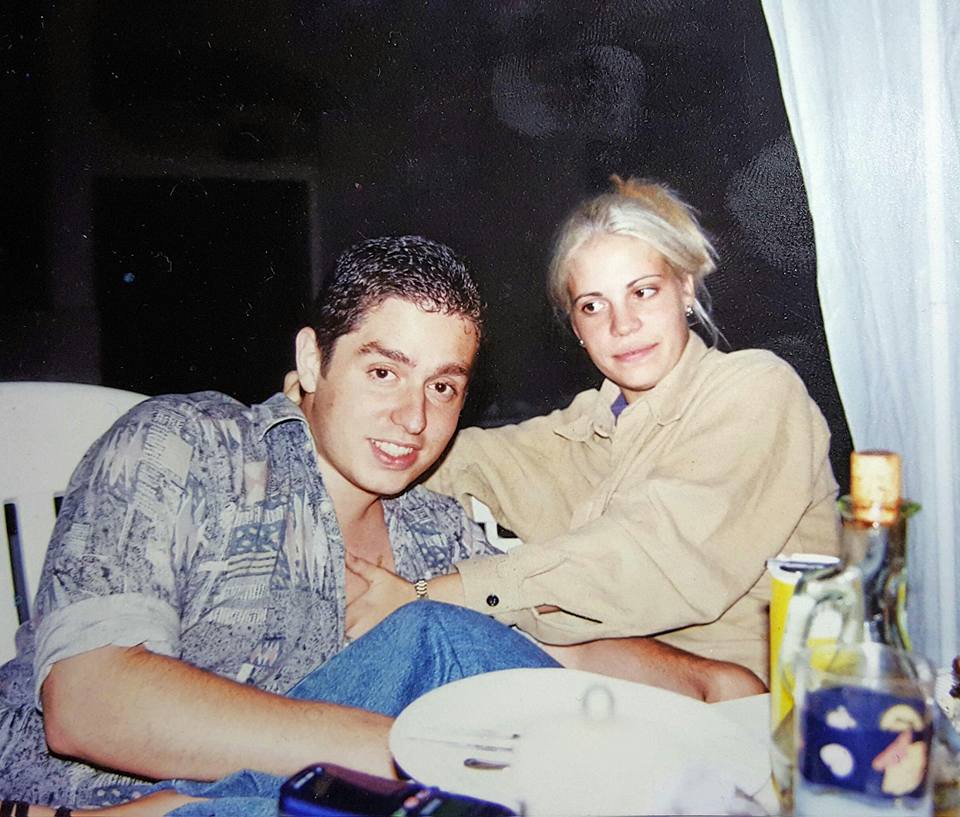
In 1999, I meet Sandra, the woman who would become my wife and with whom I have already shared 23 years of my life. A few months after we meet, we leave to live and work in the Caribbean. Here is a photo of us just before leaving France:
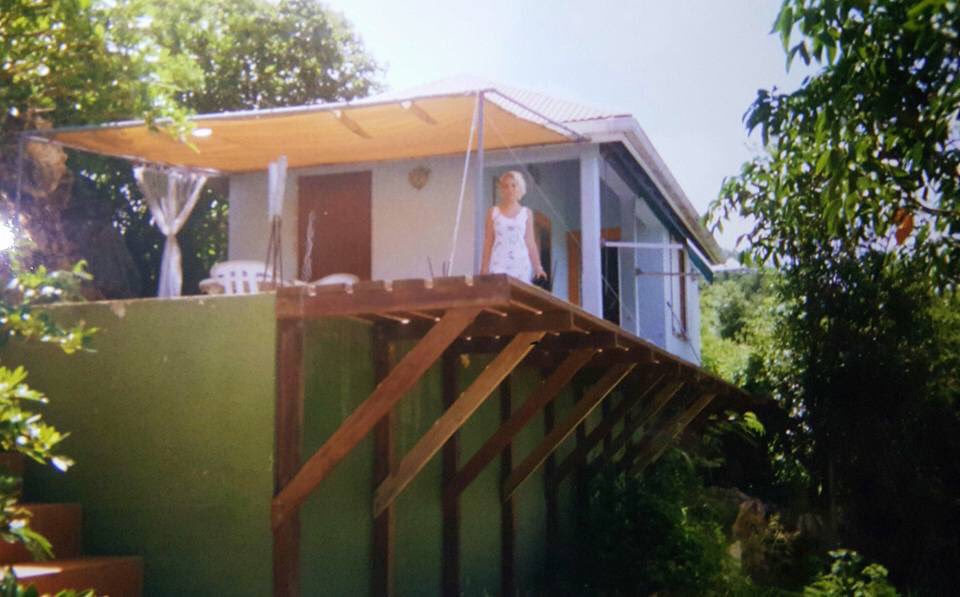
We were living in a little “hut” of just a few square metres in Saint Barthélemy, and our kitchen table, like my desk, consisted of 2 concrete blocks placed directly on the floor, with two boards on top. And back then, there were no YouTube videos to explain how to open a fresh coconut… I wore myself out on it, along with a Falcon combat knife…
We did not own much, but we were happy there. And luckily, the partner of Antony (hello if you happen to read this), the other technician working at the same company as me, Island Computer, worked at the island’s only farm and shared some excellent farm-fresh eggs with us.
Below, our splendid home at the time ;)
The phoenix
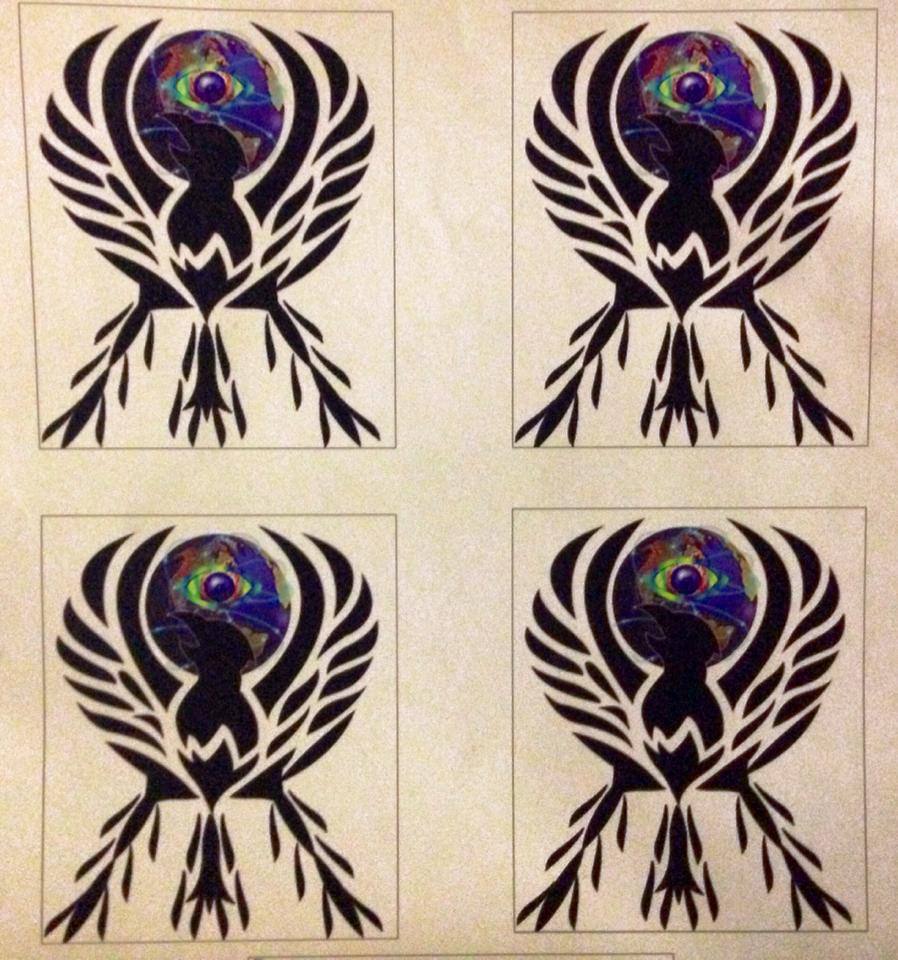
Back in France, I draw the Digital Network logo, pixel by pixel, with The Gimp.
The logo still depicts the same mythical creature: a phoenix, a legendary bird capable of rising from its ashes… This creature has always fascinated me (perhaps Phoenix from Saint Seiya is to blame?).
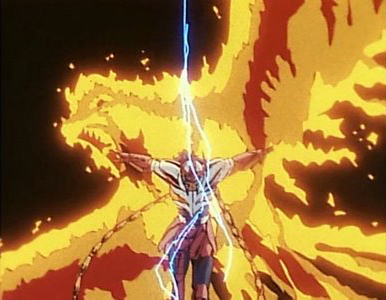
In this logo, the phoenix holds the Earth between its wings, the all-seeing eye watches over the world… This is when I start stamping every document I create with it.
The original paper artwork from 1999:
The latest version I currently use:
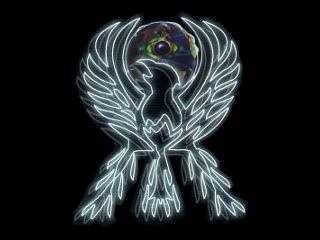
It would also appear on the website of the same name that I launch in 1999, where I share my passion for computing, particularly free software and cybersecurity. Alongside it, I start doing pro bono work, helping people and companies discover Linux, the Internet and computer security.
Creating
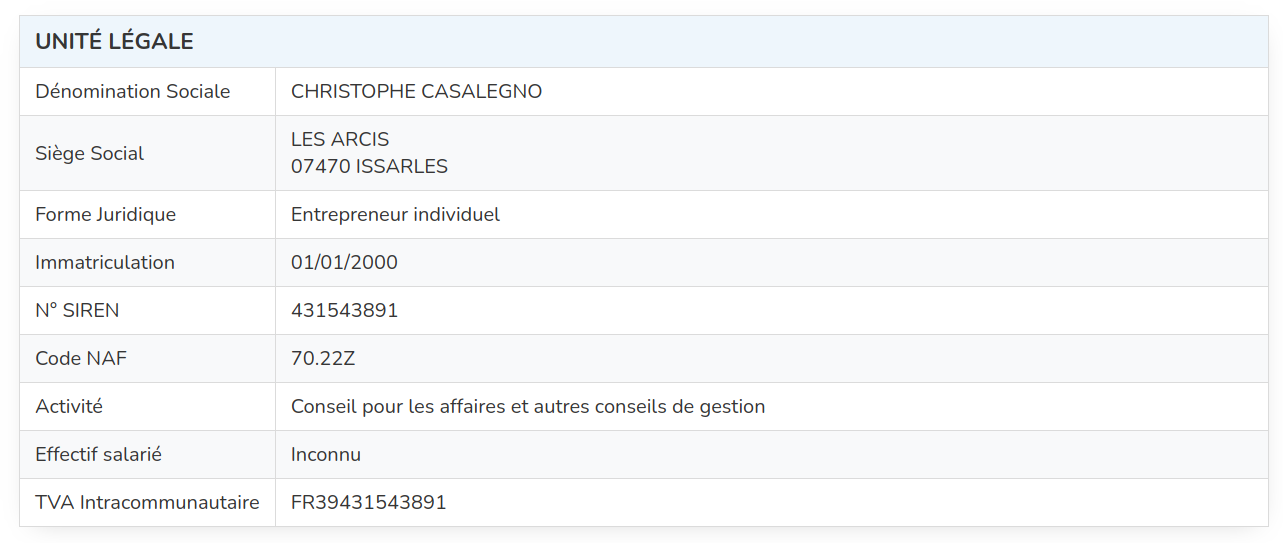
At the end of 1999, after approaching the Micro-Concept group of computer shops earlier that year to create and develop my project there, I decide to take the plunge and, along with a friend from secondary school, register as a sole trader. I am officially registered on 1 January 2000:
On 3 July 2000, following INPI’s advice, I register my website’s trademark to protect it: https://data.inpi.fr/bopi/export/brands/FR3039662
I still know nothing about prospecting or marketing, and spend the vast majority of my time experimenting or doing pro bono work…
Still, at weekends I print flyers that my sweetheart and I, sometimes joined by my parents, put through the letterboxes of businesses on the Athélia industrial estate near our home. This is when the first contacts are made.
At the same time, the corporate branch of CESI Arcueil approaches me to teach cybersecurity as part of the CAP AVENIR IP training programme, in which 80 engineers from the incumbent telecoms operator are being trained in IP networks. Through teaching, I discover a new way to share my passion. It is the beginning of “wealth”: I charge €450 excluding VAT per day, roughly my hourly rate today.
From groups of 40 students to individual tuition, from courses lasting a few hours to several weeks, delivered at a school, at the client’s premises or elsewhere, we encounter very different situations that call for quick adaptation. My sweetheart, who would become my wife in 2003, goes everywhere with me.
From then on, whenever I face financial difficulties, I turn to training (successfully) to resolve them.
Conquering
On 12 November 2000, with my future wife and other people, we also decide to create a limited liability company (SARL). At first, its only office is my 9 m² bedroom. In 2001, I decide to launch challenge-based penetration tests: the client is billed only if I can defeat their security. The principle works very well, with a success rate of almost 100%, and allows us to secure our first prestigious references.
Also in 2001, I sign a 6-month security assignment with Emailjob (a company acquired a few years later by Monster; I would also handle the migration), at a daily rate of €650 excluding VAT. I negotiate the right to continue carrying out remote operations on my own infrastructure or clients’ infrastructure from their premises whenever necessary.
Apparently, all or nearly all cybersecurity companies at the time (we called it “computer security” then) seem to refuse to provide training, although some would make it their main activity a few years later. This again allows me to gain prestigious references “outside the market”, including several government institutions: no competitor wants to expose its “knowledge” to the light of day.
It is late 2001, and my daily rate for a week of training is €1,525 excluding VAT. Clients do not even try to negotiate and accept without discussion, which makes me think, looking back, that I should have asked for much more… Admittedly, the situation is favourable: I am then the only one willing to respond to this kind of request.
Things then move faster and faster, and over the next 20 years I have the opportunity to create and witness the birth, death and growth of numerous businesses in various fields: IP networks, data centres, managed services, competitive intelligence, computer security, communications, development, and so on.
Throughout those years, not only have I been able to experiment and iterate in different fields to develop the best solutions, but my work, particularly in infrastructure, consulting and managed services, has given me a view of hundreds of fascinating projects and, in turn, their birth, life… or death. That accumulated experience still allows me today to tell quickly whether a technical project is heading straight into a wall or towards the stars.
Changing
The years pass… In 2015, we leave France for Ireland. A decision we have never had to regret, because this country and the people who live here are wonderful.
I will not go into that experience here: it would be a long story and deserves its own post. It is also here in Ireland that my wife and I create ScalarX Limited, whose main mission is to solve problems others believe are impossible to solve. To this day, that business has funded my research and development projects in various fields.
Even so, despite having very little time available, I had never completely stopped my training and speaking activities… But in 2020, I have to bring them to an end.
Falling
February 2020: after losing nearly 40 kg in barely 3 months, I am hospitalised and diagnosed with a severe form of Crohn’s disease.
After a difficult month at Bon Secours Hospital in Galway, I can finally go home… Since that day, I have been on biologic therapy (Infliximab), which means a hospital visit every 8 weeks. Here is what I looked like on the day I left hospital, after a month of treatment and “getting back on my feet” (I will spare you the photos from when I arrived…):

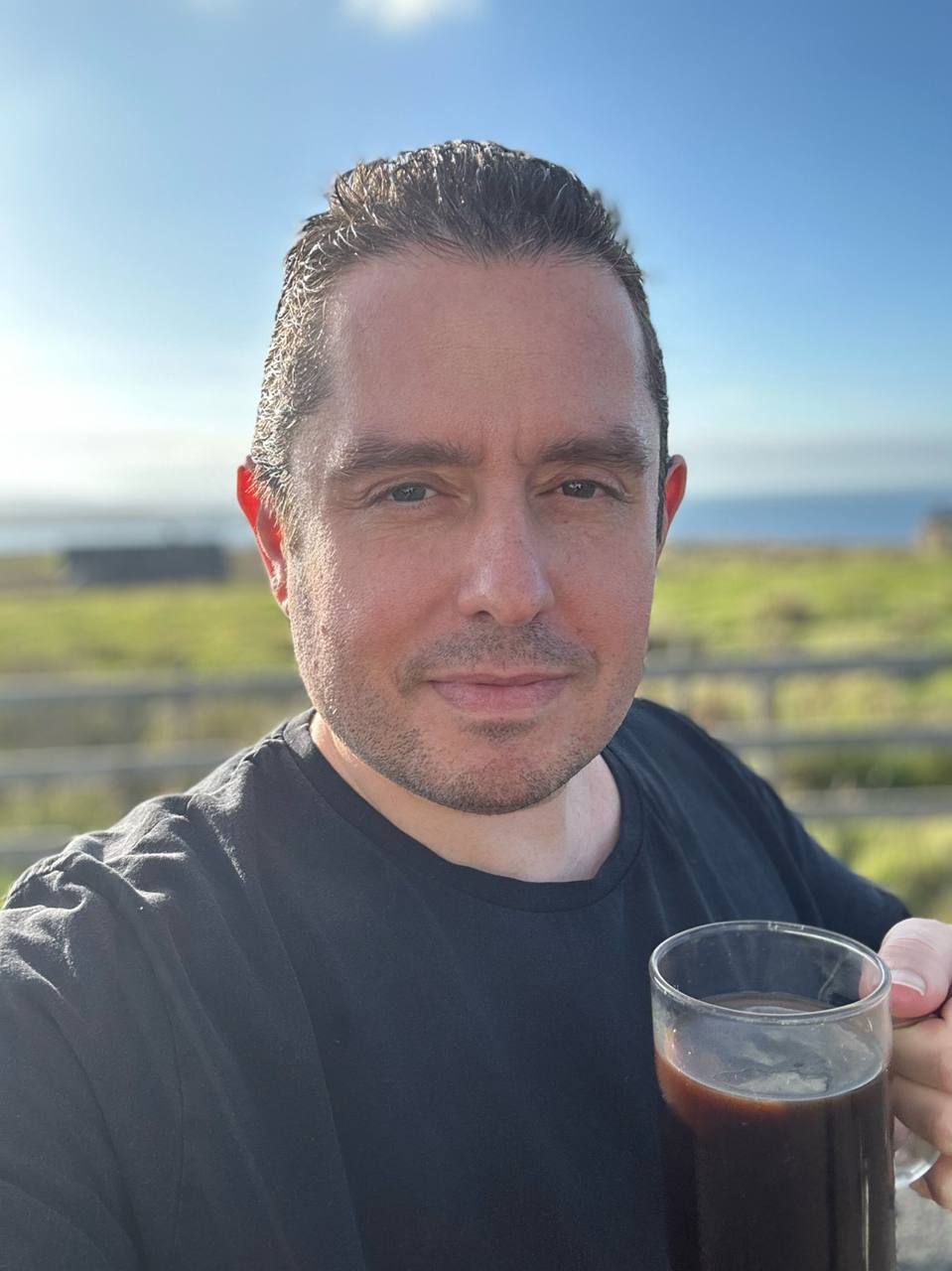
Because of this treatment, I am also in “permanent lockdown”: a bad flu or an infection, which would once have been a minor problem, can now send me straight to hospital, so I have taken every necessary measure to make sure that never happens. 2 years later, here are the results:
I am emphasising this because several of you have contacted me: you have the same disease as I do, or another autoimmune disease (ulcerative colitis, multiple sclerosis, and so on), and often write to tell me that my story helps you keep hope about what you might be able to do professionally. So I am speaking to you: keep that hope. You still have a life, perhaps several, ahead of you. So much is still possible!
Getting back up
It is around the same time that I discover other ways to share my passion, particularly through my YouTube channel. Although I create that channel mainly for people who already know and follow me, its reach would quickly go far beyond anything I could imagine.
The Internet has changed: before, you could only address a handful of enthusiasts, but today everybody is online. Thanks to that, you no longer need permission or well-connected friends to speak out: all you need to do is act. A few minutes or hours of your time can give you the opportunity to speak to and reach thousands of people, far more than I could ever have had at one of my talks.
In October 2021, after more than 22 years working over 16 hours a day without ever taking holidays or “weekends”, I was forced, to protect my health, to leave most of the roles I had held until then…
Despite my very particular situation (I can only work remotely), I have never received so many requests and proposals, each more interesting than the last, both technically, with crazy projects, and financially, with offers reaching over €800k a year. Thank you all for all of that.
At the same time, the natural growth of what had only been a hobby was slowly opening up numerous possibilities: without my intending it, my YouTube channel had become a tremendous source of qualified leads in several of my fields of activity, people I could never have reached before otherwise… But it was time to rest, not to do business. I tried to direct requests to the people I thought were most competent, and postponed the others by asking them to contact me again a few months later if they had not found solutions to their problems or the right fit.
So I spent several months resting and, as far as possible, finally taking time for myself and my loved ones… I also took time to read the many messages I receive, whether in response to videos or other contributions, through email, messaging apps and social media.
Moving forward
Here we are, today: it is June 2023. Writing in progress.
Additional information
As for the rest, still in no particular order and far from exhaustive:
I have taken part in numerous projects including, in no particular order: NMIA, NMIF (National Military Intelligence Foundation: Life Member), FAOA (The Foreign Area Officer Association), KESAC (Kaspersky European Scientific Antivirus Center), as well as:
With a strong interest in space exploration, I am a member (Visionary) of The Planetary Society, an honourable institution I invite you to discover and join if you feel like it :).
International Center for Research and Studies on Terrorism (Director of Research), CybercrimInstitut (honorary member), G4 Institute (speaker), Manticore Labs (Director of Research), International Institute for the Coordination and Response to Cyber Attacks (founder), Intelink News (editor-in-chief), Songwriting (Chris Iker), and others…
Some media outlets and publications I have appeared in or contributed to: IT-Expert, Décision informatique, Distributique, Le Nouvel Obs, RTL, Canal plus, Itélé, The Dark Book of Terrorism, Le Figaro, Opérations Spéciales, StuffMag, Souriez on vous espionne, Mag Securs, Emarrakech, BFMTV, M6…
My references: Click here to view them
Testimonials: Click here to read them
You can also view my CV here: Christophe Casalegno
You can follow me on: Telegram | Twitter | Facebook | Linkedin | Youtube | Twitch