
Introduction
The pace picks up a little more every day. Whether in “traditional” media or online, whether the subject is cloning, genetics, nanotechnology, autonomous vehicles or artificial intelligence, not a day goes by without new expressions of anger or fear about scientific progress!
Most often, religious splinter groups or technophobic associations, with no legitimacy at all, speak in the name of “the people” and some supposed “ethics” of which they claim to be the sole guardians, happily exploiting a pathological fear of change to convince as many people as possible that AI, or some other technology, will, at best, destroy their jobs and, at worst, all of humanity… Their arguments most often hinge on stripping individuals of responsibility: in their view, individuals should step aside for society’s moral orthodoxy and the “common good”.
They seize on the slightest event that can justify the so-called negative impacts of technology on humanity, or put forward such unassailable arguments as: » man must not play God « .
Most often, the case made by these self-styled “right-thinking” people relies either on conspiracy-theory reasoning, where the absence of evidence takes the place of evidence, or on statements by scientists or influential figures, often taken out of context.

Most of the time, these reactions rest on no argument or scientific evidence whatsoever: what drives these actions and words is more often superstition, religion, an uncontrollable fear of the unknown or ignorance, far more than ethics or any “common sense” that they cannot define either. Thus, in their vision of the world, the all-powerful state must impose massive regulation to control private companies, products, prices, consumers’ choices and the list goes on…
Just as some can defend the “burka” as giving women more freedom to choose who sees them unveiled, they would like to see platforms such as Amazon or Netflix disappear on the grounds that they dislike these platforms’ approach, that it would not be “good” for you and would lead you away from your “real”, natural choices.
Yet, while the human species currently consumes more natural resources than the earth can supply it, what other answer can we imagine besides scientific progress to the great challenges ahead and the real threats of human extinction?
The root of the problem: the media’s doom-laden interpretation
As soon as a scientist or public figure speaks on the subject, the headlines go into doom-and-gloom mode: Elon Musk is said to be worried about uncontrolled advances in Artificial Intelligence and to be calling for regulation, while Stephen Hawking is reported in numerous headlines to have announced that humanity will end “soon”. In the frequently quoted interview, he reportedly mentioned numerous potential threats, including AI-powered killer robots, global warming, genetically engineered viruses and even an alien attack.
Before panicking, we first need to put all these statements back into context to see things more clearly:
When Stephen Hawking announces that humanity will end “soon”, we need to read his statement through to the end in order to understand that scientists, particularly those who study the cosmos, have a very different sense of timescale from the people reporting their words. Hawking’s exact words were « I do not think that we will survive another 1000 years if we do not escape our fragile planet « , adding later that we » must keep going into space for the future of humanity » in order to find new planets to colonize.
Read this way, it is nothing like the anti-science argument some would have us believe. On the contrary, his position shows that he sees science as the only conceivable solution for humanity’s survival, in this case through space colonisation. Elon Musk, who wants to colonise Mars, shares that view.
Now let’s return to the remarks of Elon Musk, who indicates that AI (Artificial Intelligence, although the reference here is more to the emergence of artificial consciousness than to AI techniques that have been mastered for years and are, incidentally, used in the Tesla cars Elon Musk makes) would pose a major risk to our civilisation.
Well yes, obviously, Elon Musk is right! ***But*** listening to him, you quickly realise that he is not really talking about Artificial Intelligence (AI) as we use it today, but rather about the emergence of genuine artificial consciousness. And yes, that really does pose a risk to our civilisation ***as we know it***, as does any other technology capable of bringing about a technological singularity.
A brief aside: a technological singularity is a technological advance significant enough to trigger runaway technological growth, capable of causing profound, unpredictable changes in human society. Several scenarios could lead to a singularity, including the mastery of quantum technology, building the first nanoconstructor, the uploading of the human mind into a computer, the attainment of immortality, the emergence of an artificial consciousness, time travel or an encounter with an advanced extraterrestrial civilization.
Each of these changes, subject to its scientific feasibility, does indeed represent a major « risk » for our civilization, or rather for our civilization as we know it. This is not about the disappearance of civilization, but about changes so large that they can transform humanity profoundly and unpredictably. We must not forget that our civilisation has already experienced upheavals like these several times in the past: the mastery of fire, and the discovery of electricity, are among them. Yet no person of sound mind would wish to go back to a life deprived of either of these two advances.
Ask yourselves these questions: do you really miss the living conditions and life expectancy of prehistoric times, or even of the Middle Ages? Do you regret the discovery of electricity, of printing, of modern medicine, of the internal-combustion engine, or of the Internet? At the same time: do you find our civilization so perfect today that it must be protected at all costs against every change or development that progress might bring?
Must we really oppose technological progress and accept the “green dictatorship” some promise us in order to save humanity? Well, my answer is: no! Change, evolution: we must not fear them, we must want them! Throughout its history, it has always been during periods of great change, facing the greatest challenges, that humanity has been able to give its best and surpass itself. That is one reason for my passion for science, and particularly for space exploration: it pushes us to our limits and makes us give the very best we can.
Let us not forget that today we use, every day, many technologies that, in their day, caused the same fears as Artificial Intelligence (AI) or nanotechnology, sometimes worse. Some fear that the most intelligent people will gain the upper hand over everyone else and take all the power. My answer is that, throughout history, the most intelligent have never yet held power. And even if intelligence does not confer wisdom, I would rather see the most intelligent among us at the top than the worst specimens of our species, and I stand by that preference.
As for the pseudo-ethics and massive regulation some would like to impose on us: did you know that before the first nuclear bomb was detonated, many scientists thought the resulting chain reaction could not be stopped, would spread throughout Earth’s atmosphere and would burn our world to ashes?
Of course, this is not a defence of the nuclear bomb: but could technologies such as nuclear medicine, which we use on a massive scale today, notably in medical imaging or radiotherapy, have existed if a global committee had been tasked with regulating research into radioactivity because of its risks? (for radioactivity is dangerous by nature, and not only in a bomb). How many deadly poisons have led to new treatments?
Let us never forget that, by definition, regulation is applied only by those who submit to it: do we want countries far less democratic than others to gain such a substantial technological lead that we soon find ourselves economically and technologically behind, left to pick up the pieces? Do we honestly think we can compete on equal terms with China and the USA by introducing measures such as the GDPR, which will prevent AI developed in Europe or by Europeans from analysing data our economic and technological rivals will be able to access?
How many people are dying today in our hospitals or “end-of-life homes” because of excessively restrictive rules on clinical trials? It now takes 7 to 10 years of R&D before a new medicine reaches the market: does this framework ultimately hold back medical advances more than it protects patients?
While I fully support a strong precautionary principle in certain areas, such as vaccines or treatments for conditions that are not fatal in the short term, so that medium- and long-term risks can be studied, why let thousands of people die who have been declared “doomed” and have only months to live, when treatments exist, experimental though they may be, that could save several of them?
Some answer: « the long-term consequences of the treatment on the patients « . My answer is clear and simple: WE DON'T GIVE A DAMN! Terminally ill patients are dying: it is a matter of days or months. So let them freely choose to take risks to live and advance science, rather than condemning them by default!
To those who claim that progress increases inequality: once again, we need to resist the natural jealousy that seems to eat away at far too many people and stick to the facts: in 1987, when there were 5 billion of us, there were 1.7 billion ultra-poor (that is, people unable to feed themselves properly) for 140 billionaires. In 2015, we went from 1.7 billion ultra-poor to 700 million and to 1826 billionaires, while the world population then stood at 7.3 billion people. And yes, contrary to the impression the sheer volume of media coverage may give: the world is better today than yesterday. Of course it faces challenges to be met, such as global warming, but that is nothing new. It was not so long ago that lead poisoning in our atmosphere nearly did for our species. The fight of one man, the scientist Clair Patterson, known for developing uranium-lead dating, finally changed everything.
You could challenge me with a confounding factor and point out that nothing shows that more rich people caused the number of poor people to fall. But in any case, this demonstrates that the opposite link does not exist. Of course, new technological advances first benefit an elite that can afford them. It is thanks to that initial adoption that industrial processes are then developed, allowing everyone else access in turn. This applies to the most advanced technologies as well as the most ordinary, such as flat-screen displays, the Internet and mobile phones.
I am not ashamed to say it: yes, we need an elite to lift humanity up. If we do not have billionaires such as Elon Musk or Richard Branson to democratize space, to revolutionize transport or the production of solar energy, who is going to do it? The Yellow Vests?
Back to the point: the self-styled right-thinking people and technophobes who prompted this post. The most moderate now campaign for committees and other oversight bodies, forgetting history. History shows that when a major incident occurs, these bodies are quickly blamed and face serious risks. After a few months in office, playing it safe (for themselves) becomes the only possible option. Just as we are constantly flooded with storm warnings because, one day, no warning was issued, the risk was judged too low, and the storm struck anyway. When it comes to prevention, the media spare nobody, least of all scientists!
Finally, let us not forget that, contrary to what opponents of progress regularly preach in the media, technologies have never been a means for the powerful to dominate the weak: history, our history, shows on the contrary that technological advances have always heralded, been followed by or accompanied a wave of freedom and a decline in violence. Contrary to what some try to make you believe: technology is neutral: it is how we choose to use it that makes it a tool “for good”... or “for evil”, for those of you who see things in the starkest black and white.
Progress must not be stopped on false ethical pretexts: and there lies the real danger for our civilization: for, in essence, what stops progressing generally ends up ossifying. The stability to which we tend to cling is harmful: change, evolution, that is what allows us to move forward, to surpass ourselves, and to become better.
Conclusion
Today, it is necessary for each of us to take responsibility. Even if you think that » it was better before « , looking behind you will bring you no comfort, only regrets: it is too late to turn back: we consume too many resources for our small planet, and the only thing capable of saving our species is technological and scientific progress. It is science that can allow us to fight effectively against pollution, deforestation, or else disease. It is science that can save our species from the extinction for which practically every species is programmed as soon as it appears.
When people tell us that electric cars may be more polluting depending on where they are used, because a particular area generates electricity from coal-fired plants, that is ridiculous: the problem in that case is not the electric car, it is the coal-fired plant! A few years ago, the same people told us not to develop solar power because a panel would never generate, over its entire lifetime, the energy used to manufacture it. Yet it was manufacturers’ determination to keep developing the technology that produced ever more efficient and effective panels, making solar a reliable alternative energy source today. Of course there will always be someone to find a single example, a failure, a problem. That is not peculiar to technology: every year in France, for example, there are thousands of dog bites, with sometimes disastrous consequences. Yet nobody thinks that means we should eliminate every dog from the country!
Unlike certain pessimistic schools of thought, I remain convinced that modern technologies such as genetic engineering, information technology, pharmaceutical medicine, the prospect of future capabilities including nanotechnology, artificial intelligence, uploading the brain’s data into a computer and/or vice versa, or else the colonization of space, herald a brilliant future for the human species, which will perhaps become interplanetary tomorrow, interstellar the day after tomorrow, and perhaps intergalactic a little later still…
To plan for the future, projections based on today’s figures are not enough: we must take into account the spectacular technological advances that may occur. That is how, over the years, the date when we would run out of oil has kept being pushed back as technologies improved and allowed us to use less and less of it.
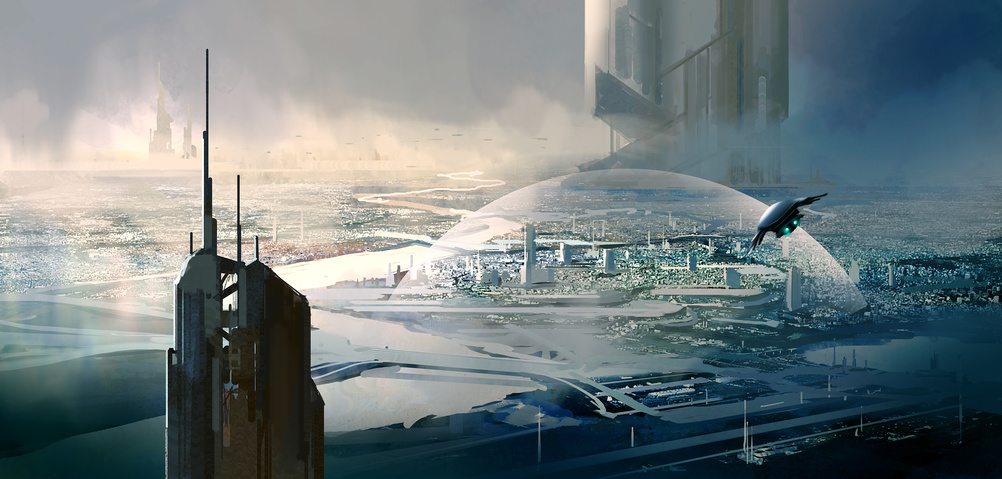
It would indeed be catastrophic if the potential benefits the future promises failed to materialise because of technophobia or unnecessary prohibitions. Let us not forget that if humanity had given in to fears like these in the past, inventions such as writing, printing, electricity, industrialization, modern medicine, or else the internet would never have seen the light of day.
The world being what it is, the voice of protest is often the loudest, though it rarely speaks for the majority. The silent majority, by definition, stays silent. Perhaps it is time that changed, and another voice began to be heard: a voice looking to the future, a voice championing a path on which humanity can transcend itself and give its best… if it stops being afraid and commits to that path!
Christophe Casalegno
You can follow me on: Twitter | Facebook | Linkedin | Telegram | Youtube
Leave a comment
Add a comment